Showing posts with label down syndrome. Show all posts

06 December, 2011

You're (Still) Going To Die In There: boring uses of clueless sensitivity

“If you like the jar with the baby’s leg, wait until you see the jar holding the baby’s head. If one actress with Down syndrome doesn’t provide enough Tod Browning-style otherness for you, don’t worry — there are two. If the line about snorting cocaine off a high school girl’s nipples doesn’t do it for you, maybe the scene of the sobbing naked man masturbating will.”

—New York Times American Horror Story review

One of these things is not like the others!

It’s perfectly reasonable for critics to take issue with portrayals of disabled characters that use them as a genre trope or try to shock the audience with the disabled character’s appearance. Lots of horror movies and TV shows do this.

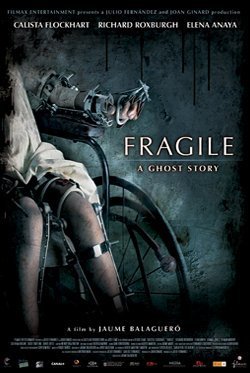
(While we’re on the subject can I just show you my favorite horror DVD cover of all time:


LOLOL. Terrifying.)

However, I really wish critics, in their rush to be sensitive about disability issues, would actually take a step back and look at what they’re saying. Which in this case, seems to boil down to the idea that a person with Down Syndrome is the same as a jar with part of a dead baby in it. And that an actor with a disability that affects their appearance would only be cast in a TV show or movie as a circus freak.

To be fair, I don’t really think this critic would be against an actor with Down Syndrome appearing in some kind of inspirational/depressing movie about the family of someone with a disability. I don’t think they would consider that a “freakish” performance. But in addition to the fact that you shouldn’t assume all disabled characters in the horror genre are functioning as freaks, I’m also not sure why critics are quick to jump all over the “insensitivity” of characters like Addie in AHS, when they don’t seem especially plugged in to notice what is wrong about more “tasteful” portrayals of disability—which in my opinion can be equally offensive.

I definitely don’t speak for all disabled people when I say this, but I prefer horror tropes of disability to tasteful tropes. Disabled horror characters have style—rusty, terrifying wheelchairs and braces more suited for steampunk conventions than actually helping someone get around. Their unsteady gait isn’t depressing, it stops you in your tracks with fear. If they’re bad, they kill people, and if they’re good, they can help you with their psychic powers. They’re not people to underestimate.

Of course they’re usually shitty characters, but as shitty characters go, I love them a lot. And because their very nature means they are not “tasteful,” they often become more human and likable than the disabled characters in a straight-faced portrayal of disability.

I wish that critics would wait to talk about disability until they’re ready to actually care about it and engage with it genuinely. The more I see people complain about Addie on AHS—in exactly the same way, and for some reason never mentioning other disabled characters on the show, like she’s the agreed-upon thing that’s offensive—the more it looks like they’re doing it to earn some kind of merit badge. “I’m sensitive to portrayals of disability in pop culture!” No, you’re not. Because if you were, you would care about things like whether disabled characters are unique, have realistic problems, are charismatic, are POV characters, and don’t tragically die at the end of the movie. Your primary focus wouldn’t be whether you can lazily compare Jamie Brewer to the actors in Freaks—which happens to be a great movie despite not being “tasteful” in the slightest.

As long as so few disabled characters are good, it’s really hard for them to be notably bad, and there’s something so clueless about condemning Addie Langdon when there are so many worse characters running around in this and other genres. In the end it doesn’t matter if the Burned-Face Man chokes you with a pillow in the attic, or a Lifetime mom ends your suffering in a more wholesome way—you’re going to die in there.

30 September, 2011

I got in an argument with a friend, as one does, and said something I may not have actually come out and said on the Internet before, but it is the basis of a lot of things I think. I really respect her for being willing to have this conversation with me.

her: i don't want to have a child with a disability because i know that if i do i will have to, in fact, love that kid like crazy and put my everything towards its thriving. i mean, depends on the disability but i think that a lot of parents do struggle with that

me: okay well, I don't mean to be a dick, but just so you know people can accidentally have a child with a disability, my mom did, obviously. so, like, keep it in mind b/c I always hear people being like "I'm not going to have a kid with a disability because I can't handle, so I'm getting amnio" or whatever. and I'm like....ehh.

her: no, of course but amanda, i don't mean to downplay whatever your mom went through, but you obviously do not have as severe a disability as someone with downs. if my kid had aspergers it would be really different

me: oh my gosh, for real?

her: yeah of course

me: how many people do you know with down syndrome

her: well, only patients

me: I know a lot of people with down syndrome and when people say things like that I wish they could know all the people I know

her: but anything really, whether it was downs or something like marfans or fragile x. i know that they are and can be really, really awesome people to know. and i'm not saying i wish that they don't exist or anything like that at all, it's just obviously they aren't easy kids to raise.

me: you think marfan's is worse than autism?

her: i don't think marfans is worse than autism, but there is a spectrum with autism

me: okay like, I don't want to be a dick to you b/c I think you're really cool but...this is really silly

her: no it's cool, i want to know what you think

me: and I know you feel like "Amanda's not really disabled, she's my friend, but ~some people are really disabled and I feel different about them~" sorry if that's a harsh way to put it, but something I have noticed about the way people talking about parenting a disabled child: people can frame any disability however they want, like, oh it's really difficult, so difficult that the parent doesn't have to be judged for any decisions they make, ever.

I actually think something that has made this really clear for me is that autism is a really stigmatized disability in terms of kids with autism supposedly being really, I don't know, cold and smearing shit or something, and with down syndrome there's more a stereotype of kids being sweet--so actually you see parents being able to frame raising a kid with autism in a really negative way, much more negative than parents can usually get away with when it comes to ds, even if you compare two essays/blogs/interviews/whatever where the kid with autism is more independent or whatever than the kid with ds. and that is why I find the "your disability is milder" thing to be kind of a red herring.

I grew up disabled in a really stereotypical way, like I felt really guilty and like a huge burden. it doesn't really matter what disability I have, it's a cultural experience that people have across levels of independence, IQ, etc.

(additional note: I was predicted not to be able to live independently, or at least that was implied, and this hangs over like...every conversation I have with my parents. it's a huge factor in our relationship and in how I live--and actually, in my abilities as well. and sometimes it annoys me when whether someone actually CAN live independently is treated as the most important thing when they're talking about disability or ableism. because tons of stuff can happen to you just because of predictions that someone made about you when you were little, and that matters even if the predictions were wrong!)

21 June, 2011

Fallacy Week: The Shocking Behavior Fallacy & The Suddenly Specific Definition Fallacy

Hi guys it's FALLACY WEEK! Every day you get some fallacy action from a post I made a super long time ago at LOVE-NOS.

The Shocking Behavior Fallacy

MARY: My nephew Ralph has autism and it’s really sad. He insists on watching Thomas the Tank Engine every day, and he’s sixteen.
JOHN: Why is that sad? There’s nothing inherently wrong with an older person liking things that are aimed at kids. I feel like in our society, people label a lot of things as problems that aren’t actually problems.
MARY: That’s really insensitive. Ralph bites himself so badly that he has to go to the hospital.

Rebuttal:
John didn’t say that it’s not a problem to seriously hurt yourself, nor did he say that Ralph doesn’t have any problems. But Mary reacted as though he did say that, and now John is knocked off balance. He wonders, did he say that? How can he explain that that has nothing to do with what he was saying? Is there anything he can say now to avoid giving the impression that he thinks self-injury is okay?
In the Shocking Behavior Fallacy, you can use a shocking behavior to excuse something unrelated that you did to or said about the person who has the behavior. The fallacy functions by changing a very specific statement to a general one. Mary changed John’s specific statement–watching Thomas the Tank Engine is okay–to a very general statement–everything Ralph does is okay. Now she can prove John wrong by giving an example of something Ralph does that is not okay.

(Fun fact: This is actually one of the most dangerous fallacies in use. By equating one thing a person does with everything that person does, it creates a class of people about whose treatment no one is allowed to complain. Let’s change the example a little and say that Mary is a staff person working in an institution, and every time she sees Ralph trying to watch Thomas the Tank Engine she takes points away from him, which means that he doesn’t get to go on day trips. John thinks that Mary is micromanaging Ralph’s choices in an abusive way. Mary responds that Ralph has to be monitored closely and dealt with harshly because his problems are so severe; he bites himself, remember?
Professionals can fall into an inverse of the Shocking Behavior Fallacy, where instead of going from specific to general to shocking behavior, they go from shocking behavior to general to specific. Ralph has a really big problem, but instead of thinking of it as one problem, Mary starts thinking of it as who Ralph is. So whenever Mary sees Ralph doing something she doesn’t agree with, she responds as if he is biting himself. The results can be horrifying.)

The Suddenly Specific Definition Fallacy

JOHN: It bothers me that doctors tell pregnant women that people with Down Syndrome can’t count change. They advise women to abort people like me, when they don’t even know what someone with Down Syndrome can do.
MARY: But most people with Down Syndrome aren’t like you. Just think, it would be so hard to have a kid who could never live on their own.

Rebuttal:
In this fallacy, you tell a person with a disability that they can’t use their feelings or experiences to make a point about their disability, because you just made a new, more specific definition of the group of people being talked about-–a definition which no longer includes them. Mary has transformed John from someone who had authority on the subject, due to his experience, to someone whose experiences aren’t valid because he’s an exception.
Let’s briefly accept Mary’s new definition of someone with Down Syndrome-–a person who can never live on their own. It’s true, John could have some opinions about whether it’s wrong to abort such a person, but he can’t speak as someone from that particular group. But guess what? The prenatal test doesn’t measure whether someone could live on their own, it just measures whether they have Down Syndrome. If a fetus exactly like John is diagnosed with Down Syndrome, it doesn’t get a break because it’s John. Its mother’s doctor is just as likely to present the diagnosis as bad news, encourage an abortion, and list a bunch of things the child won’t be able to do that may or may not be true of the John-fetus in particular, or people with Down Syndrome in general. Being an exception gets the John-fetus absolutely nothing.
The reason the Suddenly Specific Definition Fallacy is a fallacy is because of its suddenness. Stuff goes along, people with a particular disability are getting discriminated against, mild and severe alike. Everyone’s welcome in the stigmatized group. Then someone says, “Hey, I have this disability and all these things you’re saying about my disability aren’t true.” Bam! Apply the Suddenly Specific Definition Fallacy and remove the person’s authority (they can keep the stigma).

(Fun fact: I’m sorry if the example comes off as melodramatic, but I’ve read a lot about this stuff and John is not exaggerating.)

12 September, 2010

I want to develop this more but whatever

So one session at camp, two of my campers were named Mark* and David. They were both men in their forties who had Down Syndrome and had lived with their parents all their lives (well, David had just moved to what his parents called "a residence," a few days before camp started).

Mark's mom gave me a long talk about how slow Mark was, and so on. She stage-whispered that she had really spoiled him. But finally, she reassured me that Mark was "a fine young man."

WTF?

David's mom said similar things, I guess, about him being slow, but she didn't make me uncomfortable the way Mark's mom did. And she didn't refer to her middle-aged son as a young man.

This was the session that my brain completely shat out because I was working with people too much like me. I guess that technically David and Mark had similar problems. But when David was getting dressed and he spaced out, it was because he started playing with his shoe or very slowly organizing all his '80s TV show theme song tapes. Mark was just sitting there, staring at nothing and waiting.

David didn't like swimming, and when I asked him if he wanted to go swimming, he would say no. Mark would sort of shrug and smile shyly to himself and eventually say something that sounded like an agreement. Then he wouldn't change into his bathing suit and would eventually tell me that he was going to go swimming tomorrow, not today.

I was really stressed because they were both people who required a lot of focus on my part, but emotionally, David was much easier to take. I mean we had problems about a lot of things, but they were the kind of problems you want to have, if you know what I mean. He wanted to stay up and listen to music instead of going to bed. He wanted to make a speech to the whole camp about the circumstances of Michael Jackson's death. He got pissed because he had a really specific idea of what he wanted his Halloween Dance costume to look like, and we couldn't find clothes that fit his requirements.

Like most people who have been alive for four decades, David had preferences and habits. He was a fan of many TV shows, including M.A.S.H. and Dark Shadows, and he would tell me all about them (at my request). He hated to put his head under the water when he was taking a shower. He needed to sleep with a light on. Some of David's personality traits clashed with mine (I find it really hard to sleep with a light on) but, you know, that's what people are like.

Mark just agreed to everything with a sweet smile. He would very occasionally have bursts of energy where he would make really elaborate jokes I didn't understand. I acted really excited about these things because I wanted to encourage him to express himself more, and in fact I did find this stuff enjoyable, but it didn't happen that much.

I also felt uncomfortable because Mark seemed really detached from reality. For example he seemed to think that if he wrote down a schedule of what activities he thought should happen every day, that's what would actually happen. Because of the fact that he was hard to understand, I feel like I could totally be wrong in how I'm interpreting this--maybe it was just another joke--but I know that I was once a person who was very confused about what was coming in from the outside world, and equally confused about how I could affect it. In retrospect that was a scary time and I'm really glad I understand things better now and feel more in control. So it is upsetting to me to think that maybe Mark was stuck in that kind of experience of not really knowing how to affect his life.

I really, really hated living with Mark. On a day-to-day level, I just was frustrated because it was so hard to do daily living stuff with him like getting dressed and brushing teeth, but much deeper than that was the fact that he seemed so distant and, sometimes, submissive to the point of blankness. He made me incredibly uncomfortable, and I felt guilty for being frustrated with him, and guilty that I couldn't help him.

I complained to other counselors about the fact that Mark's mom called him a fine young man. If he'd lived with someone who thought he was a child, that could be why he hadn't developed the strong personality that David had. "No," another counselor replied, "it makes sense for her to say that. They are children. Especially people with Down Syndrome--their faces look so young. How old do you think my camper Josh is?" I guessed that Josh was twenty and the other counselor replied, "He's thirty," as if that proved something. I think he also told me not to be so judgmental of Mark's parents.

However, if Mark was a child, I wasn't clear on why he was writing letters to women asking them to "sleep in my bed please," sneaking into my bed when I was out, showing me this picture in the middle of the night [NOT SAFE FOR WORK NOT SAFE FOR WORK and imagine what it's like to be shown that by someone you've just met when you are half asleep], telling me I had nice legs, trying to kiss female counselors and campers, and other stuff that I don't want to talk about here. All this really freaked me out. Mark was not the only camper who ever acted like that, but there's a difference between someone who's very outgoing, and sometimes crosses the line into sexually inappropriate behavior, and someone who rarely initiates any contact with other people except when they are sexually harassing them. It made me scared of being around Mark--not necessarily scared about what he might say or do, but just scared about the way he was, and feeling like I was failing him because I couldn't understand him or connect with him.

Mark's mom was the only parent or guardian who ever tried to give me a tip when she picked him up from camp. We weren't supposed to take tips, and maybe there were one or two campers I would have taken a tip for, but I gave the money back without hesitating. I didn't feel like I had done a good job with Mark. I felt like I'd done a really shitty job. Mark's mom got mad at me and told me that "the girl last year took it--why won't you?" I tried to say that I already got a paycheck, and I was just doing my job. Finally Mark's mom gave up, got in the car with him and his dad, and said, "Well, I'll just give it to charity then."

"You should give it to something Mark likes," I mumbled as she drove away.

14 June, 2010

privilege scrounging

I think this has a lot of potential--not really to be posted or published anywhere else, but just to be a really complicated and decent post on this blog--but I kept putting off the first draft because it seemed so daunting, and at this point I’ve been writing it for weeks and I’m leaving for Vermont in three hours and going to have basically no Internet until I get home at the beginning of August. So I’m just posting the first draft, which is a bunch of pieces of things jammed together. Please, say anything you can think of to say.

This is not really a piece with ideas or arguments, it’s just a really long confession. Bear with me.
...
On a related note, I can't help thinking of my tendency for gleefully tearing apart anyone I perceive as thinking that mild ASD is not a disability, or is especially interesting or cool. I mean I do think those views are fucked-up and fallacious, but they are not held by millionaires who pass without effort and have all the friends they could want. The situation is not a person who feels powerful wanting to push people with severe and/or visible disabilities even farther down on the food chain than they already are. That is what they're doing in practice, but it's my sickness too.

Before I go far, I should probably say that I don't think of ASD and intellectual disability as being two completely separate things, at least in practice. In addition to the facts that of course some people have both, and that people who really only have ASD are often misdiagnosed with comorbid ID, I just feel there's a lot of overlap in terms of what people with ID and ASD are like, and also what our oppression is like. I hope it's obvious that this doesn't mean I would refer to myself as ID, or try to be in spaces/organizations that are just for people with ID--but it is the reason that I don't think of this as an ASD blog or really think of my disability-related trains of thought as ASD trains of thought. Also people with ASD, ID, and both all make me feel safe, and feeling safe is the focus of what I’m trying to say.
...
A bit of my history as staff or pseudo-staff, because I’m not really staff yet (actually at nine tonight I will be arriving at my first real staff job, at a summer camp). It is sort of a big identity thing, it’s in the sidebar, and I guess it gives me a somewhat different relationship to DD than someone who only has DD. Better and worse.

I once, like many people, was “interested in autism” (I can’t imagine being less interested in anything now). In my freshman year of college, when I was realizing that I wasn’t cut out for my previous aspirations, I took a psych practicum where we went into a special ed school and observed/helped out in a class of nonverbal ASD kids. I won’t pretend this was some kind of life-changing experience. I found it interesting and relaxing, and was fond of one girl who would somberly take hold of my hands and run her fingers over the collars of my shirts. Her aide was really shitty to her, and one of my psych classmates explained that it was hard to find people to work with disabled kids. So that’s how I started aiming in that direction--I figured it would be easy and I couldn’t possibly be as bad as the people who were already doing it.

That summer, when I was nineteen, I got my first job. I worked in Cape Cod at a complex that contained a golf course, a drive-in theater, a regular movie theater, and a flea market (which was located in the same place as the drive-in). Mostly I cashiered at the flea market snack bar during the day, which I really liked. Some days were incredibly slow and I could just read and write. I didn’t mind days that were fast either. I liked dealing with big crowds from a safe vantage point behind my register, seeing lots of different kinds of people, and endearing myself to the flea market vendors who would then give me discounts when I wandered out of the snack bar on my break. The other people who worked during the day were two middle-aged women who were easy to be with. We would joke around together.

Every week, I would have to work about a day and two nights at the regular movie theater, where most of the employees were my age. This was a lot harder because they all knew each other and some of them seemed slightly contemptuous of me. (I should have expected this after what happened the first night I worked there, when they reacted with barely-concealed disgust after a teenage boy with a DD was unwise enough to start a conversation with them.) I also had more trouble working there because I wasn’t just a cashier, and I didn’t work fast when I was being asked to do lots of different things at once. So they were always at least slightly annoyed at me.

Then later my boss started assigning me to work at the drive-in snack bar at night. This was sort of okay because I got to use the register I was used to, and watch the movie out the windows. But I didn’t get along as well with the people who worked there. I was going through some issues about being queer, and two of the people who worked there were a middle-aged lesbian couple. I always wanted to talk to them and have them like me, but they liked everyone else better. I especially wanted to talk to one who was a special ed teacher, but she was always rolling her eyes when I had trouble understanding the words she was saying or overfocused on how to do something. At both the drive-in and the movie theater, I spent some nights getting more and more depressed, feeling really cold and nervous as my mind went over the same circles (especially when I was sweeping or mopping floors). I didn’t know anyone in Cape Cod so my social interactions consisted of joking around at the flea market, and phone conversations and letters with my friends from school. I got more and more lonely and depressed.

The last night I worked at the complex, I worked at the drive-in. As I got to work and was punching in, getting ice for the soda fountain, and putting my hair up, I started to think about how I would soon be back in college with my friends. But when I thought of my friends, I thought that they weren’t real. I knew they were, but they didn’t feel real. They felt like people I had made up.

All night I felt like I was slipping away from myself. It was really hard for me to remember any errands I was being sent on (I had to make up little songs to remind myself which novelty ice creams to get out of the freezer which was about two yards away from where I was standing). I kept wishing they’d put me on the register, which I was good at, but when they finally put me on the register, I was fucked. Every time a new customer appeared, I couldn’t recognize the food they were holding. I looked at it really carefully and slowly figured it out: pizza, chocolate bar, Hoodwich. Then I had to look at the register and find the key to press (I normally knew the register like the back of my hand). During the rush between the first and second feature, the special ed teacher snapped at me for getting in her way and accidentally signing in to the wrong register. As soon as the movie was over, I did my share of the cleaning as fast as I could, pulled on my flannel shirt and my bag of books, and slipped out the back of the building while the other employees were hugging each other goodbye.
...
That summer, and during the fall, I had occasional positive encounters with other DD adults. I was part of a school club that visited and arranged activities for the residents of local group homes. I also met a few people who came to the flea market and movie theater.

Once I remember being at the theater all day with a really intimidating girl named Julie--in the morning and early afternoon, almost no one came in. A guy with Down Syndrome came in with his mom, who went to the bathroom and bought gift certificates from Julie. As was usually the case when it was slow, one person was at the counter and another person sat down in the theater lobby. The guy came in and sat across from me in the lobby, and soon he was telling me about the upcoming Star Trek movie, which he obviously spent a lot of time reading about online. I am not into Star Trek (except the girl version, which I don’t think the movie was based on), but I could occasionally interject, “Oh, I love Simon Pegg,” and I was relieved enough by the non-stressful interaction that I enjoyed everything he had to say.

I remember wondering what Julie thought. It was probably obvious that I had no job-related reason to talk to this guy. Did she think I was being nice? Did she think, wow, Amanda’s so weird that she can only talk to a person with Down Syndrome? (Number two is of course the true assessment, although it’s interesting that I assume the agency is mine. “That guy has such a calming presence that even a giant freak like Amanda doesn’t mind talking to him” is an equally accurate way of putting it.)

These brief encounters were pleasant, but the real game-changer occurred in the spring term of my sophomore year. My friend suggested that we volunteer twice a week at the MRC sheltered workshop for DD adults. Ostensibly we taught a class about countries--we would discuss facts about a particular country, look through books about the country, and do a related craft. Talking and looking at books didn’t take very long, and coloring gets boring after the first thirty years, so we often spent a lot of time talking about whatever we wanted. After class, my friend and I would walk around the workshop saying hello to people we had met when visiting the group homes. Every time we were there, our beloved Mike Ward would come and find us at least twice (barging into the conference room to show us his fliers, running up to us before we left and giving us a drawing he’d stolen from someone else in his group home).

Over time, three things happened.

1. There were some people I became more close with, and would usually sit and talk with during class. I learned a lot about what was important to them and what they were happy and unhappy about. It was cool because it was the first time I really saw “that kind of people” on a regular basis and knew them well enough to consider them friends.
2. A lot of things I hated about myself were things I subconsciously associated with “that kind of people.” Once I actually met a lot of t.k.o.p., I was able to recognize the nature of my self-hatred; and once I got to know some of them, I was able to see that I should be unashamed of any resemblance between us.
3. I loved going to the workshop because a lot of the people were so loud and effusive in how they expressed themselves, and many people were really happy to see my friend and me. I felt that here, people liked me, I knew where I stood with them, and there was enough diversity of behavior that I didn’t have to worry about doing things right. I once said that I hoped the afterlife was in the MRC workshop.
...
Most feelings can be accurately summed up by quotes from the movie Serenity. This feeling's quote is the thing the Operative says to Mal about how there would be no place for him in a better world. It sums up the guilty resentment I experienced as I became more advanced in how I thought about developmental disabilities--saying "ID" instead of MR or retarded (the words that the nondisabled people around me used), and becoming more aware that sheltered workshops and group homes weren't something I should simply accept as the places where MRC consumers would naturally work and live. The people at MRC were some of the only people in the world I felt uncomplicatedly safe with; although I recognized it as fair that I should feel scared of offending them the way I felt scared of offending everyone else, I felt that I’d lost something when I realized there was an appropriate word to use and I hadn't been using it.

I liked the workshop and the group homes, because they were environments where people without disabilities were in the minority. I hoped to work at the MRC school after college because it had the kind of low-key setting I felt comfortable in, and the building was full of kids who looked and acted different. I wasn't interested in being an aide for an ID or ASD kid at a mainstream school, where I imagined the halls would be noisy and chaotic, my student and I would sit in a neat row of desks, and the non-disabled students would bully us both. (If my student was socially successful, of course, that would also suck; my student would be my only person to talk to, since I knew I wouldn’t fit in with the teachers and other aides.)

I'm using the past tense even though not all these feelings were in the past.
...
I've only been to the workshop twice this year. But I have cashiered at my school's dining hall during the period of the day when several people from the workshop also work there, and in light of becoming more guilty, this has been a tense experience.

First there is Laurie, who is someone I knew at the workshop last year. We weren't close because she was always with her boyfriend, but when she saw me at the dining hall she would say hello in the energetic way she did most things. Sometimes, in the first few weeks of my job, she would come up to the register and we would each ask how the other person was doing. This petered out, and I'm wondering if it was because I felt self-conscious around Laurie and talked to her in the shy restrained way I would talk to an acquaintance who wasn't disabled. After a month, she just said hello to me in a bored way, and this made me sad.

Second there are other people, who I liked to watch when I was at work because it's a relief to see people moving jerkily, swinging their arms, or concentrating on things you're not supposed to concentrate on. Some of them I wanted to talk to--a guy with a beard, a guy who warned me not to touch a stack of hot dishes. I would always walk by the MRC people to punch in and out, to get detergent, to throw rags away--it started to make me feel cold like I felt cold during nights at the theater complex, this feeling of not being able to talk to them because I wasn't good for them or was drawn to them for the wrong reasons.
...
I think of myself as very normal-acting. And I am very normal. Acting. I have spent a lot of time buckling down to get through things without being immediately identified as extremely different. When you ignore feelings for long enough, they go away, and this means that in addition to my occasional dissociative symptoms, the fact that I for example have anxiety problems is something that I have to prove to myself logically by making a list of things I’ve done that could have no other motive. I tend not to feel angry when I hear people say things like, “Retarded people depress me because there’s no point to their lives,” because I do not feel anger on a regular basis. I figure that professionals who try to stomp stimming out stimming people are just coming from a place of not really examining their privilege or putting themselves in stimming people’s shoes. Actually a lot of the writing on this blog, I think, is a result of my numbness and subsequent willingness to engage with arguments that are quite irrational and hateful.

Anyway, I think what I’m trying to say is that I don’t think of myself as disabled. Or I do but I don’t. In terms of working with developmentally disabled kids and adults, I don’t think of myself as a DD person who feels understandably relaxed when I get to stop packaging myself for non-disabled consumption. Instead I just think of myself the way I imagine non-disabled people see me: this weird girl who is really drawn to DD people, beyond professionalism, beyond allyship...just, kind of creepy.

As I don’t experience anger and anxiety on an obvious level, I forget what it means for me that I am normal-acting. But I can try to construct the facts like a detective. I have some very good friends and they are different. But the truth is that most moments (airport, library, classroom) I never stop working, I feel incredibly inadequate anyway, and that’s painful in a way I don’t think about because it’s always there. Except with certain people at the MRC.

Passing is not some sort of miserable burden--the group homes I think of so nostalgically are not places I’d want to live myself. I like being in college and thinking about where I want to move after I graduate. I like blundering around alone more than I would like having people ask if someone like me should be left unattended. I like privilege, do I ever--but I would like to avoid having to earn it with the constant, barely successful work of passing. If I was staff in a segregated environment, that would be possible--I’d retain the social status of a normal person without having to actually be around n.p.s.

So I mean--I’m not saying I’m not a piece of shit.
...
What I try to do is--and I mean, I don’t want to feel it all, but the other week I told my best friend that I could remember facts about him, I could remember how we started talking, but I felt emotionally like I’d never met him before. I was even kind of nervous, like I was talking to a celebrity for the first time, but trying to pass for someone who knew him well. I didn’t realize until my friend got upset that this wasn’t something that happened to lots of people. I conclude that this level of dislocation, while practical, is a little unbearable if I’m going to continue being alive.

What I’m trying to explain to myself is that I also count. Because of course I know that I’m a piece of shit--I understand that it is horrible to feel attached to segregated environments because those are generally environments where people have less control. I got very afraid of these feelings in myself, they were a piece of my sin I couldn’t even look at--and this was infuriating because I had felt like the person I was with MRC people was the only really pure part of me. I began to sort of resent progress, or at least hope it would happen slowly so I could still have the kinds of jobs I wanted to have.

I am trying to remember that I am in fact disabled and that I’m actually stressed out by real things, and that a better world for disabled people is not a world where Disabled People (whoever they are) get better and I am still stuck where I am. In a better world I would not have had to hit on a solution to avoid the wearing down of my ability to feel or sense things; I wouldn’t have to think about my life like Fantastic Mr. Fox, trying to locate the exact tunnel I can use to feed myself without coming in contact with Boggis Bunce and Bean. I’m trying to remember that if I wasn’t disabled I wouldn’t feel like I’m getting away with something when I get a job or have a conversation with a stranger. When people asked me out I wouldn’t avoid answering rather than wonder when they would realize what was wrong. If the MRC workshop is a refuge then it’s actually a refuge from something, right?

I think I’m trying to remember that while I can and do oppress MRC consumers if I accept everything the MRC does as The Way Things Should Be, instead of hating myself it is better to untangle it and try to remember that I can also be helped by that nebulous Progress.

06 June, 2010

google search that makes up for every dumb or offensive one, ever

"examples of ableism in the movie precious"

I love you, person. I love, love, love you.

I just wish there had been more results for your search that were actually related.

20 April, 2010

Zoe decided to win at life

Why Glee Makes Me Want to Kill Someone

other recommended reading while I'm at it:

Just Stop It (really old Dave Hingsburger post about trying to get ID people to act "age-appropriate")

I am not responsible for your discomfort (another really old post, by the person who wrote the "Growing Up With Sky" post that I linked in a previous recommended reading)

(I know I need to do a "mental age" tag and maybe do some more in-depth posts about mental age etc. I have a lot to say about it.)

oh wait, edited to add: A Five-Year-Old's Explanation of Autism

AWWWWW

(This is the best day of the year because it's the day that everyone else thinks and talks like me.)

08 April, 2010

Recommended Reading Number Two: Down Syndrome Prenatal Screening

This is a two-year-old Dave Hingsburger post--I found it when I was messing around, and I really recommend you read it--A Question Along the Way. Actually, this one too: A Story About George. They're both stories related to prenatal screening for Down Syndrome.

It's just an upsetting situation. I mean, we freak out about it happening to us, and we make this analogy, but I can't help but feel we should be doing something about the fact that it's already happening to them. But what can we do?

I don't know many people with Down Syndrome right now. There are three kids with Down Syndrome in Zach and Joe's class--Steven, Anthony, and Deja. Steven seems to have a bunch of sensory issues and he and Deja both get upset a lot; I haven't really gotten to know them. I like Anthony, he has a sneaky smile. About a year ago I knew two older women, Sharon and Emily, who both had Alzheimer's but were about as different as two people can be. Emily struck me as incredibly brave and I still think about her a lot.

I'm going to adopt when I have kids, and I know I'll probably want to adopt a baby with Down Syndrome. I have this whole riff about how I'm going to dress him in really snazzy clothes to make up for all the people who dress their kids with Down Syndrome in jerseys and give them bowl haircuts. But any kid of mine will probably end up dressing like a lumberjack, I'm sure.

In 2007 there was a New York Times article about parents of kids with Down Syndrome who are trying to educate medical professionals and prospective parents about what kids with Down Syndrome are like--which is to say, you know, kids. Perish the thought. My favorite part is when the medical professionals basically say that it would be mean and upsetting to ask people who are pregnant with Down Syndrome fetuses to talk to one of these parent advocacy groups. God forbid they actually have to think about what they're doing; FEEEEEELINGS strike again.

This is the article: Prenatal Test Puts Down Syndrome in Hard Focus. It has some accompanying videos which I haven't finished watching. The article also made me aware of a really boss Newsweek piece by George F. Will, Jon Will's Aptitudes, about his then-21-year-old son:

One must mind one's language when speaking of people like Jon. He does not "suffer from" Down syndrome. It is an affliction, but he is happy-as happy as the Orioles' stumbling start this season will permit. You may well say that being happy is easy now that ESPN exists. Jon would agree. But happiness is a species of talent, for which some people have superior aptitudes...

Because of advancing science and declining morals, there are fewer people like Jon than there should be...

It seems mistaken to say that Jon is less than he would be without Down syndrome. When a child suffers a mentally limiting injury after birth we wonder sadly about what might have been. But a Down person's life never had any other trajectory. Jon was Jon from conception on. He has seen a brother two years younger surpass him in size, get a driver's license and leave for college, and although Jon would be forgiven for shaking his fist at the universe, he has been equable. I believe his serenity is grounded in his sense that he is a complete Jon and that is that.


He also wrote this piece, which is more focused on prenatal screening: Golly, What Did Jon Do?

25 February, 2010

This woman is a delight; and, On Speaking Badly.

Andrea Fay Friedman, the woman in this video, portrayed a character on Family Guy who has Down Syndrome and, when asked what her parents do, says, "My mother is the former governor of Alaska." Palin had a shitfit of course, and then Friedman did some interviews saying that she thinks it's funny and Palin should get a sense of humor. In this video she becomes visibly upset about the fact that Palin is using Trig's disability to get attention. Friedman emphasizes that her parents gave her a normal childhood and that's what Trig should be able to have too.


(Transcript by Tlonista here at FWD/Forward.)

Some person commented and said that Friedman obviously didn't understand the situation because she said Palin was trying to use Trig to get "votes." Argh, why does it matter whether she used exactly the right word for what she was trying to say?

I remember that I used to have this reaction to videos of intellectually disabled people talking with other people, where if they didn't talk that much, or spoke in a cliched or prepared-sounding way, I would think that maybe they weren't expressing their own opinions. Specifically, I'm talking about videos where the star of "Retarded Policeman" would appear with a non-disabled friend or family member, and express that he was okay with being in the show, and that people shouldn't get offended on his behalf. (There was also a video saying that he was okay with the word "retard" in Tropic Thunder.) This is the first video, where he appears with his sister:


Ponce: Hello, world. Josh "The Ponceman" Perry here, with my sister Stacey.
Stacey: Hi, guys. We've been reading a lot of your comments and wanted to clear a few things up about Josh. Josh is an actor.
Ponce: And I am hilarious!
Stacey: He is hilarious. And he loves acting.
Ponce: And I want to do this for a living.
Stacey: So just sit back...
Ponce: And enjoy it.
Stacey: And to all you people who have a problem with Josh acting, or even if you find it offensive in any way...
Ponce: I just want to say, I have Down Syndrome, but you people are fucking retarded.
Stacey: As the Retarded Policeman would say...
Ponce and Stacey: (in Retarded Policeman voice) Bye!


Ponce and his brother Scott (who writes and acts in short films with Ponce, and also wrote some of the Retarded Policeman videos) ended up refusing to make any more Retarded Policeman videos because they said that Ponce wasn't being paid enough given how successful the videos were, and made a video about that.


Josh: Hey people.
Scott: Hey guys. The reason Ponce and I are doing this video is because, over the past year, we've had a ton of our friends and fans ask us why we're not doing Retarded Policeman anymore, and why there's no new episodes.
Josh: I love the show and I liked doing it.
Scott: Yeah, in all sincerity, we absolutely loved doing Retarded Policeman. It's one of our favorite things. However, the simple answer as to why we're not doing it anymore is that we had an agreement with Mediocre Films that has not been honored. That's really all I want to say about it. Um, we, um, we put a blog up about that if you guys want to check that out, it's http://theperryboys.wordpress.com, we'll put the link here, and put the link in the side there. But believe me when I say that we have tried everything that we could for this past year--basically, all year, trying to work something out and make things okay so that we could continue, but we've sadly reached an impasse--like, we know we're not gonna work things out. Uh...that's it--anything else?
Josh: I just want to say, from the bottom of my heart, I loved doing Retarded Policeman, and I love all your comments, and I just want to say, from the bottom of my heart, it breaks my heart.
Scott: Okay. Just leave us comments, you know--we love your comments here, we love your comments there. That's it, we're gonna move on, we're gonna do bigger better things, we're gonna keep doing what we do, and that's it, right? Out and out.
Josh: (in Retarded Policeman voice) Bye!
Scott: (snickers) Nice.


When I first watched these videos I felt uncertain. If Ponce was really expressing himself, then why did the things he say either sound scripted, or sort of unfocused; and why did he generally not take the lead in expressing points? Then I realized how dumb my reaction was. If I was making a video like this, I would want someone else to express the big points. I'm not such a good talker myself, and it sucks when people think that (because I say "like" a lot or lose my train of thought or have to prepare what I'm going to say) I'm not sincere. Sometimes I even start thinking that I don't know what I'm talking about, just because I can't produce an immediate response when someone says something. So I couldn't believe that I would judge whether someone else was expressing their own thoughts, just based on whether they talked "well."

Andrea Fay Friedman is obviously emotionally affected by the idea that Trig isn't being allowed to have a normal life. As a person whose parents were told to put her in an institution when she was born, Friedman doubtless has a clear idea of the prejudice that people with Down Syndrome face, and the pity and admiration points a person can rack up just for having a kid with Down Syndrome. So why the fuck isn't Friedman allowed to say that she thinks Palin is exploiting that, and that Trig deserves to have parents as good as Friedman's? Who cares if she uses the word "votes?"

(In the event that Ponce/Josh Perry is one of those people who Googles himself all the time, and finds this: Dear Ponce, I hope that you don't think I'm insulting or criticizing the way you talk. Just trying to explain how stupid it is to judge people by the way they talk. I really like the videos you and Scott do, especially the Paranormal Activity one.)

04 February, 2010

The harder fallacy

I keep thinking about something my friend said after we watched Precious and I was talking about how the portrayal of the child with Down Syndrome was offensive. (I'm going to refer to the character as Quishay, which is the name of the little girl who played her.) My friend kept saying, "Well, it IS harder to raise a kid with Down Syndrome." I said "Do you actually know any people with Down Syndrome, because if you did, I think you'd feel differently." My friend was like, "What do you mean, do you think I wouldn't think it's harder to have Down Syndrome? It's a DISABILITY. It's not a good thing. Are you saying it's not harder?"

I'm probably caricaturing this in my mind because it was a while ago and also it made me really mad. When I quote people who made me mad I tend to repeat the things they say in this particular voice that's both monotonous and overdramatic. I know this is a problem. I should be mature enough to disagree with people without being shitty about it. But it's really hard not to be shitty about it! Plus I hate the "it's harder" strawman even more than I hate the "but bad things will happen to you if you don't pass!!" strawman (#3 in the linked post).

So, I will just say what I wanted to say to my friend, but couldn't get out very clearly. Here are two facts about disability:

1. For whatever reason, nondisabled people tend to get grossed out or uncomfortable around disabled people.

2. By definition, all things being equal, it is harder to be disabled than it is to be nondisabled. Also, it's harder to be the guardian of a kid who is disabled because it often costs more money and the kid might have to live at home longer, or forever. Also, it's sometimes harder to be close to a disabled person (as a friend/significant other, as part of your job, or as a family member) because you are used to relating to people in a particular way that doesn't work with this person, or because you had built them up in your head as a person without a disability.

Some parts of #2 are not inherent aspects of disability. For example it isn't fair that it costs more money to raise a kid with a disability. That shouldn't be the case. But the fact that it's not inherent doesn't make it less real for the people for whom it's real. If a person is spending all their money so that their disabled kid can go to school, because public school does not do what the kid needs, it IS harder for them. So, yes. I'm saying it is harder to raise a disabled child.

But that's not the only thing in the world that is hard. And hard is not the same thing as repulsive or tragic.

In Precious, Precious has two kids. She is a young teenager. Her kids are the product of nonconsensual incest. Having kids as a young teenager is really hard. Getting raped by your father isn't just "hard," it is horrible, evil, and tragic. There aren't enough words to describe what it is. It's a lot worse than having a kid with Down Syndrome or any disability.

Now I guess it sounds like I'm on a track of saying Down Syndrome is okay because being raped by your father is worse. That's not my intent. What I'm saying is, Precious has two kids. The second kid she has, who has no disabilities, changes her life. She loves him tremendously, right away, and her love for him gives her the strength to fight back against her abusive mother and seek help. There are other factors that give Precious this motivation; it's not just the baby, it's that she has gotten support from her teacher and classmates. But still, this thing that is very difficult--a baby born to a single teenage mother--ends up being AMAZING. This exact thing happens to girls in real life, sometimes. Situations that are objectively really hard are experienced as wonderful and joyful.

So, harder doesn't equal bad or gross. And I would say that the portrayal of Precious's older child is as something bad and gross. It is totally unrealistic for Precious to have a baby with Down Syndrome. Down Syndrome isn't an inherited condition, it's a genetic mutation, so incest doesn't increase its likelihood. An older mother increases its likelihood, and Precious is very young. I believe that this plot development, which belongs in a sci-fi movie, is just meant to add to the atmosphere of tragedy and gloom around Precious's life so far. She's physically abused! She's sexually abused! She can't read! She's poor! She had a baby and is pregnant again...AND, her kid has DOWN SYNDROME. WORST THING EVER. Quishay is not shown smiling or interacting with Precious and is not filmed in the loving way that her second child, Abdul, is filmed. (It's true that Quishay doesn't live with Precious for most of the movie, but number one, no one forced the writers to write the story that way; and, number two, we could have had shots emphasizing Quishay's cuteness and lovability when Precious gets her back at the end of the movie.)

The movie Precious is hateful to people with Down Syndrome because it uses Down Syndrome as a shortcut to say "Precious's life is horrible." At the beginning of this post I listed two facts about disability. This movie exploits fact #1, nondisabled people's discomfort and revulsion about disability. That is an immoral thing to do. It is incredibly disingenuous to claim that the portrayal of Quishay is somehow legitimate because "it's harder to raise a kid with Down Syndrome." This isn't about difficulty, it's about prejudice and using a disabled child as a horror-movie monster.

I am so tired of this. I call it "the harder fallacy." It sucks because when you're trying to point out that someone is being prejudiced, you get totally knocked off balance by a bogus argument about whether the victim of the prejudice, or their parents, has a hard time. But it's not about that. They're two totally different things.

eta: I'm pretty bad at science, I apologize. Apparently it's not as unlikely as I thought for a teenager to have a baby with Down Syndrome. However, my points about the portrayal of Quishay still stand, and would stand no matter what disability she had.

26 January, 2010

Summer Heights High

One time I read about this TV show that was like a mockumentary and the review I read mentioned a scene where a teacher was talking in a really patronizing way to a student who was intellectually disabled, and you're supposed to laugh at the teacher. I just remembered this today because I realized that I started watching Glee because I thought it was that show. You can imagine what a disappointment that was and soon I got caught up in the disappointment and forgot about the other show. But this is a real show, right? Is it? I want to find it. Does anyone know what it is?

Okay I just noodled around on Wikipedia and I think it might be Summer Heights High. I guess I'll watch it and post about whether it sucks or not.

If it wasn't two years old I'd think this was a parody of Glee; as it is, it makes me laugh a lot:

Mr G is a thirty-six year old drama teacher at Summer Heights High. Mr G not only believes that he is an incredibly talented and well-liked teacher, but that his students also share his intense passion for drama and performance...He is hostile to the disabled students being involved, under the belief that they will damage the quality of his musical.

HA HA HA, whoever wrote this show is clearly psychic

two scenes from Episode 1:

Ja'mie: I think my teachers like me because I'm, like, the smartest non-Asian, and I can do sports and all the stuff that Asians can't do.

(Toby, a boy with Down Syndrome, comes up to Mr. G. and hugs him)
Mr. G: This is Toby, one of our specials from the special education center...it's a separate part of the school, down at the bottom, but we allow them to play with the normal kids at recess and lunch and that sort of thing...(hugging Toby with his hand on Toby's back) Normally you're not allowed to touch students like this, 'cause there are child protection laws, but we normally turn a blind eye with these ones. This sort of thing: fine. (moves his hand lower) Not fine. (moving his hand up and down) Fine. Not fine.

<---so, those are examples of how you do ironic racism and ableism. Racism and ableism are slightly heightened to reach a stylized, and therefore funny, level: Ja'mie matter-of-factly stating that Asians can't play sports, and Mr. G. referring to disabled kids as "specials" and saying that teachers can behave inappropriately with them (this might not be funny to everyone but stylization always gets me really hard--the word "specials," in particular, kills me). Ja'mie and Mr. G. are over-the-top characters and their statements serve to show how awful they are; they don't seem like something the audience is expected to take seriously. We're not presented with an Asian character, played straight, whose only dialogue is about schoolwork. That wouldn't be ironic, it would just be stereotypical and boring.

Yeah, so this show is just incredibly stunning in terms of actually being funny in all the ways that people claim Glee is funny. I'm not going to post more unless something really interesting happens that's related to disability. But if you currently put yourself through the agony of watching Glee, know that you should be watching this instead.

01 January, 2010

Precious

I feel like art is bad art if it portrays horrific events in a way that dulls the audience's reactions. I felt this way about the book Love Does Not Make Me Gentle or Kind by Chavisa Woods, which contains several stories in which underdeveloped female characters are violently abused and murdered. According to comments I've read of hers, almost every event described in the book happened to two women who Chavisa Woods knows. However, because of the way some of the stories are written, the abuse stops seeming real because the characters don't feel real; they seem to exist only as the objects of abuse. I'm not trying to write a review of Love Does Not Make Me Gentle or Kind--for the record, it has some stories I really like--but I'm just saying that I don't think it matters if the events of a piece of art are literally true, I think it's still legit to say that they come off as over-the-top or dulling.

Anyway, I sort of expected to have this reaction to Precious--i.e. I thought it would be so horrifying that I wouldn't be able to actually engage with it. I do feel like Precious's mom is so one-dimensionally evil that it's hard to relate to what's going on, but it turned out that the movie wasn't just a one-way trip to The Worst Life Ever, so that ended up being a smaller aspect of the story than I thought it would be. I don't feel qualified to comment on whether the movie is racist and/or damaging, except to say that Precious was a likable and interesting character and not just a one-dimensional victim, which is cool.

I might as well talk about what I actually feel qualified to talk about: the portrayal of Precious's young daughter with Down Syndrome. I was sort of biased because I had read Dave Hingsburger's post where he criticized the movie because the child was called "Mongo" and never given another name. It's not like I think the creators of the movie are saying that's a good thing to do, so I feel a bit like I can't criticize the movie for that.

However, when I really thought about it, I realized that it's incredibly unrealistic for a teenage girl to have a baby with Down Syndrome because most people who have babies with Down Syndrome are middle-aged. I said this to my friend, and she said that it's not unrealistic at all because the baby was a product of incest. But then when we actually looked this up, we found this article saying that there is no correlation between incest and Down Syndrome. So now I feel like they only made the baby have Down Syndrome because it's supposed to be just another shocking horrible thing about Precious's life. And that's really fucked up.

When Precious has her second baby, her love and devotion for him changes her life. She is capable of this love and devotion partly because her life circumstances have already begun to change, because her teacher and classmates care about her. It makes logical sense that when she had her first baby, she didn't react in the same way. But it still bothers me that they created a narrative where her disabled child is just another problem, while her nondisabled child improves her life.

My friend said that it is bad to have a kid with Down Syndrome because it makes your life harder. I don't think that disabilities being hard is a reason to use a person with a disability as a plot device to show how awful their parent's life is.

It's not a huge aspect of the movie. It's not even a small aspect, I guess. I think they just didn't think about it but that almost upsets me more, that it just made perfect sense to them to use Down Syndrome as a shorthand for awfulness.

11 December, 2009

A bit more on Glee

Seriously I think this is what Ryan Murphy knows about intellectually disabled people: they're inspirational or something! But they're not good at anything and they live in hospitals waiting for us to come and read to them! But we have to pretend that they're good at things to make them feel better, but then we'll yell at them for being bad at those things, because we don't want to discriminate!

I could write a million essays on how weird the portrayal of characters with Down Syndrome was. For example, the joke about Brittany cheating off Becky's math test. Obviously the joke is, Brittany's so ditzy she thinks people with Down Syndrome are good at math, or else, Brittany's so bad at math that a person with Down Syndrome is better at math than she is. I don't necessarily mind this, because people with Down Syndrome usually aren't good at math; I can imagine a show making fun of disabled people's impairments in a blunt, dark-humor kind of way, that I wouldn't find offensive.* But this particular joke is just so weaselly, you can even pretend that it isn't a joke about Becky's disability if you want. In a previous episode Terri said she didn't want a baby who was a "Mongoloid," and obviously this was supposed to be shocking-funny, but I bet that no character would be shown using that word to describe Becky. And I think that's because the writers of the show aren't willing to face the fact that they are insulting actual people when they use words like Mongoloid.

They want to be seen as shocking and offensive in a daring and funny way but they're not willing to own it. And that's what really annoys the hell out of me about that episode, and the show in general. And also the show's fans who claim that offensive elements of the show are "satire." If it was satire, it would be funny. Mercedes's constant complaints about the music are not supposed to be quotable one-liners, nor are they supposed to be a parody of stereotypical black characters. She's just a badly written character whose creators rely heavily on stereotypes when they write her dialogue.

*I'm not especially fond of the Retarded Policeman videos on YouTube, but at least they're not weaselly; most of the offensive material is performed by an actor with Down Syndrome. The videos make fun of intellectually disabled people, but in the end I think it must positively affect viewers to see an intellectually disabled actor who is talented and funny. When Glee makes fun of deaf people they're not as brutal as the Retarded Policeman videos are about intellectually disabled people--but they imply that deaf people exploit their deafness for personal gain and can only be successful because of others' pity. The makers of the Retarded Policeman videos actually know that intellectually disabled people can be talented, which makes them automatically better than the creators of Glee.

eta: okay this one is kind of good


but I still think How's Your News? is a million times better (actually, it's a million times better than just about anything):


this is my favorite:

12 November, 2009

Okay Glee, you have redeemed yourself a little

This morning's episode of Glee was some parts good, one part terrible, and one part better than I would ever have expected.

First off, I want to explain what my problem with the show was in the first place. It definitely wasn't any one line or event. It was just that certain characters were not written morally. And when I talk about writing morally, I don't mean the characters need to be nice; I mean the writer needs to think about the characters the way people should think about other people in real life. Realizing that everyone is complicated, everyone has reasons for what they do, no one thinks of themselves as a villain or comic relief. The thing about writing morally is that it's the same thing as writing well. So for me, when Glee is offensive and when it's a low-quality show, it's both of those things at the same time.

The opposite goes for Mad Men. It's a really high-quality show and it also never offends me. Characters do offensive things, but I never get the impression that this reflects the writers' ignorance. And more importantly, characters who in lesser shows might be reduced to villains or comic relief, or something else less than human, are treated with respect. While we might sometimes see them as funny or villainous, we also see that they take themselves seriously and are doing what they think they have to do.

Anyway. Aspects of Glee from worst to best:

1. Sue Sylvester lets a girl with Down's Syndrome on the Cheerios and is mean to her. Will thinks Sue is being mean, but Sue says she's treating the girl like everyone else. Will wonders why Sue would do something so un-Sue-ish. Then we find out that Sue has a sister with Down's Syndrome who she's very close with.

This was a pretty good example of how the people who write Glee decide to take on issues that they have absolutely no knowledge of and aren't interested in learning about. The characters with Down's Syndrome behave like four-year-olds; Becky, the teenager, walks around holding hands with her friend and is manipulated into buying a cupcake. (Why couldn't Becky just decide to buy a cupcake because it's a nice thing to do?) Sue's sister, a middle-aged woman, enjoys having Sue read Little Red Riding Hood to her. Also, she apparently spends all her time in bed at a place that I think is a hospital, and this is portrayed as normal. If Sue's sister has a significant disability, which I guess she does, I would expect her to live in a group home with other disabled people--not just lie in bed waiting for her sister.

Becky is a perfect example of a character being used as a device instead of being human. Becky has almost no lines and we know nothing about her except that she wants to be a cheerleader. Also, the actress who plays her is terrible (at least I'm pretty sure she is; she has so little to do that it's hard to figure out what she should be doing). There's also the fact that she is in no way qualified to be a cheerleader. Why couldn't Becky have been a good, or even decent, cheerleader? Why did she have to be so clumsy that Sue's letting her on the squad must be interpreted as an act of pity?

I was actually excited when I found out that someone with Down's Syndrome was going to be on the show, but this ended up being by far the worst aspect of the episode.

2. Rachel is told she will get to sing "Defying Gravity," but Kurt wants to sing it instead. He complains to his dad, who is very macho and doesn't understand Kurt's interests, but is supportive of him nonetheless. His dad threatens the school, saying it's homophobic and sexist to not give Kurt a chance to sing the song. So Kurt and Rachel each get to perform the song, and the glee club will vote on who sings it better. Kurt can sing just as high as Rachel, but at the last minute he intentionally screws up, because someone called his dad and said "your son's a fag." Kurt explains to his dad that he is used to homophobia, but his dad isn't, and he doesn't want to be so visibly gay that his dad will have to experience harassment.

This was really good; I like Kurt. He's very stereotypical, but it doesn't bother me because he is human. I feel the same way about Tara from True Blood (maybe I'll post about her another time). I liked that we saw how being gay affects Kurt, and how even though he's really feminine, he can actually be stronger than a masculine guy like his dad.

3. ARTIE!!! This was fantastic. Will says they should have a bake sale to afford an accessible bus, but all the other people in glee club say that Artie doesn't mind being driven to things by his dad. In fact, Artie does mind, but doesn't want to make a fuss. Will sees how hurt Artie feels, and inexplicably has enough money to buy wheelchairs for the whole glee club which he makes them use for three hours every day. He also makes them dance in the wheelchairs. When the other kids have to deal with how inaccessible the school is, how people don't look at them, and how hard it is to dance in a wheelchair, they respect Artie more and work hard on the bake sale. When they end up raising the money, Artie says they should use it to make the school accessible instead, because that will help future disabled students, instead of just helping him.

Also, Artie and Tina obviously have a crush on each other, and two or three times during the episode, Tina tells Artie how much she admires him. Each time, Artie replies, "Oh, well, you have a stutter, so you understand having to overcome something." The last time this happens (after they've just kissed for the first time), Tina tells Artie that she doesn't really have a stutter, and has just been faking it for years because she's shy and it makes people leave her alone. She says that now she's become more confident and wants to stop pretending to stutter. Artie gets really mad at her for faking, and says something like, "You get to be normal now but I'm stuck in this chair for the rest of my life."

I loved, loved, loved this. Artie has never been developed at all, but now that they've finally developed him, they did a really good job. He's very kind and mature for his age, but also justifiably angry about the way people treat him. I think it's common sometimes for people who are minorities to go with the flow and appear unruffled by things, but actually be really angry on another level that they don't show to most people because it's not practical. This is probably especially the case for people who have disabilities that require support; we don't want to offend anyone in case we end up having to ask that person for help. Artie saw Tina as being on another level from other people, someone who could understand, and I think it's because of that that he feels so betrayed and expresses really negative emotions about being in a wheelchair, which I'm not sure he would express to most other people.

Maybe some people would find Artie's negativity offensive, but I didn't. I was actually pleasantly surprised by how social-model the show was about the whole thing. When I heard that the episode would involve the kids using wheelchairs to "see what it's like for Artie," I thought it would be all about how soul-crushingly miserable it is not to be able to walk, but really, we were shown a montage of the kids getting hit in the face by people who didn't see them, having to deal with things that were too high up to reach, etc. And when Artie expressed bitterness at the end, it seemed to be more about looking weird and being cut off from other people.

I just really love Kevin McHale. Even though I think a disabled actor should have been cast, he is really adorable, talented, and great. The best scene in the episode was when Tina kissed him and he put his face in his hands like he was too happy to look her in the eye. He was on True Blood by the way! He was the coroner's assistant who gets blown up.