I am always trying to work on the “about this blog” page because, since I am not a famous writer or performer, it’s just about the only opportunity I have to describe myself. When I was 15 I was really into personal websites so I can attest that I’m not the only person who needs to make a whole page on the Internet just so I can tell you my favorite color of lipstick (Violet Frenzy) and my favorite Disney Channel Original Movie (obviously Mom’s Got a Date With a Vampire).
However, as I’ve gotten older I have less and less to say about myself. Don’t mistake that for an increase in humility. I just can’t do as much now.
When I was in college, I would have described myself this way: “I’m studying creative writing and Latin. I’m a cashier and I take classes where my teachers and classmates insult me so I can volunteer with disabled kids. I write fiction and pop music, and I also make little art projects, like I take pictures of myself pretending to be a ghost leaving my body. And I write a blog about disability issues.”
Now it’s more like: “I work as an aide for a fantastic person. Occasionally I write in my blog and every few months I work on music a little bit.”
My phrasing has misled at least one friend into thinking that working for Anna is very difficult and this is why I don’t do anything else. I don’t think working for Anna is hard and it’s easier, better for me, and more meaningful than most things I was required to do when I was in college. But my life was much more physically circumscribed when I was in college and a lot of things were provided for me. I was already having trouble with daily living things when I was in college, but there were a lot less of them.
The amount of work that goes into getting ready in the morning, traveling to and from my job, getting ready for bed, and trying to eat and shower an appropriate amount takes up at least as much of my cognitive ability as my job does. I also can’t let myself space out at work because it would affect someone, which wasn’t really the case with my college classes. I’m glad that I spend my days somewhere where my presence actually matters--one of the things that made me so angry and depressed in college was that I was required to exhaust myself doing things that didn’t immediately benefit anyone. But having to be alert means that my job drains me of energy much faster than my classes did.
If I don’t have to be at work and I’m not trying to deal with eating or hygiene, I’m trying to force myself to focus on getting stuff done around the house so I won’t make life harder for my roommates by not doing my chores (which are already disproportionately tiny compared to theirs). If I’m not trying to force myself to do that stuff, I definitely don’t have it in me to do anything but lie down and watch or read something in pieces with spacing breaks. If a friend asks me to hang out, that’s usually good because I can let them do the focusing and make the decisions. I can enjoy what we’re doing. But when it comes to stuff where I have to focus--like writing or working on music--it never seems as important as lying down and trying to forget how much I hate moving and thinking.
I can tweak this to sound better or worse, right? Oh the existential anguish of having to drag myself to the shower every four days. I don’t need to be an PCA/writer/musician like I expected to be when I was younger. I do some stuff I like and I feel like my job is meaningful and I do think that’s the most important thing. Sometimes I still get upset because I feel like it’s unfair that I don’t feel better or get to worry about things less or do more of the stuff I’d like to do.
I came across the blog Dealing with Dysautonomia, which is really good. Maddy writes about how she became sick when she was 14, and how she struggled with her identity when she couldn’t do the activities she used to identify herself with. I don’t know Maddy and don't want to quote her without asking, so here is the post I'm talking about.
Sometimes I sit down and try to make plans for organizing my life in a way that would magically enable me to write and play music. I really hope I figure it out, but the answer might be that there’s no figuring around not being able to do as much as I expected.
The point is I may have to just tell you my favorite color of lipstick is Violet Frenzy and leave it at that.
I’m Autistic. I am 25 and live in San Francisco, in the United States. Here’s the blog directory which is not up to date--the reason I made it was because I used to write about a lot of non-disability-related things on the blog and I wanted the disability things to be easier to find. Here’s me and Jonathan Wilson being really cool.
(A young white woman, with a stuffed elephant on her shoulder, is wearing a shirt that says “?$#@&*!! YEAH MAN!")
I don't respond well to certain kinds of advice on this blog, because when I write about personal stuff I'm usually just trying to give an example of what a particular thing is. When someone tries to suggest solutions to something I obviously don't think there is a solution to, this just comes off like they're telling me I'm wrong and I don't know how things really are. It's okay to flat-out disagree with an idea, but at least say so instead of giving me a (usually bad) suggestion on how to deal with a personal problem that I was just using as an example.
I usually do not talk about disability-related things to most people, because the majority of average responses are triggering to me. I'm hesitant to say triggering since I don't have PTSD, but I guess it seems like a useful word because even though I think their responses are wrong, I know my reaction doesn't make sense. I end up thinking about it at least all day, crying really hard for a long time, and sometimes doing stuff that isn't a good idea.
I can almost always avoid being triggered because I just avoid talking about these subjects with people I don't trust. Unfortunately, sometimes it can happen even when people I trust just don't understand one small thing that I thought they understood. It's so stupid that this happens because they didn't even do something wrong.
Anyway, a few weeks ago I got kind of worried because I started having trouble walking. (I probably walk a bit Autistic but I don't have a noticeably different gait like some people with CP or neurological illnesses do.)
For periods of time, I started kind of stumbling forward or walking forward with one foot and dragging the other foot to the side. One time, I actually couldn't stop walking and stand still and just stumbled back and forth while waiting for my friend to be ready to go. Also, I started finding it really hard to move forward or up and was having to grab things and pull myself as much as possible. At other times, I experienced a weird kind of sudden exhaustion where I would have to put my head down.
My idea was that this happened because I kept going places and doing stuff for three weeks without just sitting around and not thinking about things on the weekend (the walking problems appeared about a week and a half into this period). As soon as I had a chance, I took a weekend to not move or do things, and since then, my walking is normal and most of my other moving is too.
I know that other Autistic people have things like this happen, but it makes me a little worried just because it hasn't happened to me before. Also, this year my head has been involuntarily jerking to the side and dropping and rolling around and stuff. I probably can attribute this to drinking a lot of caffeine, but both things make me nervous just in case they're a symptom of something. If they aren't a symptom, neither of them really bothers me, but I'd like to ask the doctor about it just to know for sure.
I'll probably mention them to the doctor tomorrow, but it kind of sucks because I haven't told my doctor I'm Autistic and I won't be able to because I know I might get triggered if I do. Since I can't explain that I'm under a lot of stress a lot and that it's not totally out of left field for me to have movement problems, I won't be able to give the doctor all the information about what's going on.
A while ago when I was posting about how I wished I could get help with things, a friend suggested that some mental health counselors are willing to help with cognitive problems. This is something I would have to ask my doctor about to find out about, but that's something I won't ever be able to do at all because there's such a high likelihood of triggering things being said.
As a side note, sometimes I end up really upset when I go to doctors anyway because they give me instructions that I'm simply not able to follow. I can't tell them that so it feels like I basically have no options.
Recently I've been having some times when I kind of walk by stumbling forward without bending my knees and I also grab on to handles and railings to pull myself up and forward as much as possible instead of using the muscles in my legs to push myself up. I think it's just from walking a lot on those days and generally being exhausted as a person.
Anyway, I realized that if anyone asked me why I was walking like this or using things to grab and push off of, I would say, "I'm just doing it for attention," and I would believe it.
I don't think I'll ever know if this general orientation toward not believing in or fully feeling my negative emotions or discomfort is just an organic "part of my disability" or a side effect of how my disability and other things were treated while I was growing up. Either way, it pretty much defines me.
[the video hasn't processed yet, if it doesn't make it onto youtube I'm going to plotz though.
FUCK YEAH SEAKING IT'S PROCESSING
score
]
Hey um I tried to do this yesterday but the video was too long and it wouldn't post. Um, I made this video a year and a half ago which is called "How Asperger's Syndrome affects my life now." I, um, constantly want to delete this video because I don't identify as having Asperger's Syndrome anymore, and um the video also starts with me saying something like, "Well I guess I'm very high-functioning so you probably shouldn't judge Asperger's Syndrome from listening to me," and in retrospect I think that's a ridiculous thing to say. But I mean like everyone else I like when people talk to me on the Internet and I get a lot of comments on that video so I don't want to delete it. But I wanted to make a sequel.
Um, first of all, like, the whole Asperger's thing...kind of a stupid word, not going to be in the DSM anymore because it's not a concept that makes sense. Um, I mean it's not the only ASD diagnosis that I ever got, either, and I also um...the thing is that the reason I used that word about myself was not ever because I wanted to. Like, I used to use the word autistic when I was much younger. But um, from non-disabled people I would face you know criticism because I would be told, "You shouldn't be using that word about yourself because you're not severely disabled enough" or something like that. Um, I don't really think that this is a way of talking that makes sense, I mean there are lots of...pretty much every disability that I can think of, there are some people who are very severely affected and some people who are very mildly affected. I also don't think that people can just talk to me and decide that I am mildly affected when they don't live my life. Um, so, I guess, I'm no longer interested in feeling guilty about using the word Autistic about myself--I mean I consider myself part of Autistic culture, I consider people with severe disabilities to be people who I feel as much loyalty to as I do to people who have a disability experience very much like my own, I don't, um...I mean, I've known a lot of people with severe autism, and I mean it's more severe but it's not something else, and I don't...that doesn't really make sense to say it is.
Yeah, sorry, to actually talk about myself, um...I, like, I feel like, I mean before, I didn't know other people with autism so I was very um, my whole view of what stuff was was very much based in what I read in books by people who didn't have autism, so I was, I feel like I was always trying to fit myself into that kind of category and then when I didn't fit it I would just say, "oh well I must be so high-functioning that that's why I don't fit into that description." [note: but then there were other things I couldn't do that even people with "classic Asperger's" [i.e. worse than mine] were supposed to be able to do, so I didn't understand that.] But you know as I've gotten to meet other people with autism and other disabilities I've realized that you know I have stuff going on that's pretty classic sometimes but it hasn't been written about as much but it happens to most of the Autistic people that I know.
Um, okay, so, first of all, the whole social thing has been something that's really massively changed for me in the past year and a half since I made that video and since I became more involved in disability culture. I think the thing is that even though before I used to think of myself as being, like, "better" and "recovered" and "not really autistic anymore," like, because I was always judging by, because I was always judging myself by the standard of whether I looked like a normal person, I...it was very hard for me to relate to other people who didn't have disabilities because I always felt inferior to them.
Like, um, I guess um the way that I walk is kind of different from some people who don't have disabilities, so um, especially with other women--when I was friends with other girls, if we were both walking down the street I would become so conscious of the way that I walked and the way that it wasn't like the way the other person was walking that I would get like pretty upset, and um it really poisoned my relationships especially with other girls because I was very, I was always comparing myself to them and thinking how I couldn't move like them and stuff like that which is kind of stupid.
Um, another thing is that I was really really worried always that other people didn't really want to be around me and I was just like attaching myself to them, so it meant that it was hard for me to reach out to people and then when I did I felt really like upset about it and like they didn't really want me there and I mean...I think this has been a really...it was a really bad thing in a lot of my friendships because I couldn't help...I would always resent people as if they'd actually done something to me, when in fact like the only thing that was going on was that I thought that I was inferior to them so I just resented them. And um I guess all I can say is that since I've become more conscious of identifying as disabled and less upset about being disabled, it's pretty, like...you know if I'm walking along and I know that I'm walking differently from someone else it's like, surprise! I guess I'm disabled so I walk like I'm disabled. Shock! Not really a big deal. Um, I mean I figure that other people probably want to be around me just as much as they want to be around anyone else so I'm not afraid I guess of trying to reach out to people and talking to people and...
It's funny because people, um, professionals always talk about "social skills" and they frame social skills as being able to look like you're normal, but I mean, what I would call my social skills have vastly improved now that I don't care about that anymore because you know when you're not thinking about trying to make yourself look like you're normal, you really are much more interested in other people and you have a lot more energy to spare on just caring about other people and listening to what they have to say.
Um, other stuff, the brain stuff, which is actually, like, the real problem. Um I've been watching The Walking Dead recently which is a TV show about zombies and I figured out that I'm basically a zombie. For example if a zombie was following a person that it wanted to eat, and the person leaves, the zombie will just keep going in the same direction, and um that's pretty much what I'm like. It's hard for zombies to like make new decisions or um figure things out, like they just see objects that they used to use when they were alive and they just get triggered into using them the same way 'cause they don't really, you know, get it. Um, it's very hard for me to think about anything in a new way or to switch myself into any kind of new task, which can be a really huge problem. It's, um, and I mean there's also a lot of stuff which I guess is probably a bit like having dementia which is just you know constantly forgetting what you're doing a lot--and I mean, I know all this stuff is the kind of stuff where people can be like, "oh that happens to everyone," which is totally true, but I mean the way that it happens to me is very pervasive and makes it hard to do things.
I also have pretty severe anxiety problems and um a problem is that I get such severe anxiety about my um (laughs) cognitive problems, which I guess are what you would call poor um central coherence and executive dysfunction, and stuff like that, if you like big words, um I get so upset about those things that I like will intentionally like block off like the part of my brain that tries to remember what I have to do and um will intentionally get myself stuck on like new ideas--or, not new ideas, I will intentionally get myself stuck on old ideas so I can just kind of stim out on them and not have to um do the actual work--which I mean, it's very hard, the only way...I mean, the good way for things to happen is for someone else to just sit down with me and like calmly explain to me what I have to do and help me like stay like emotionally stable during that.
But that doesn't always happen because I don't get disability services at school because I haven't been recently diagnosed enough, etc., and even if I was people would probably be like, "well, autism is just a social disability so why do you think you need help with mental stuff?" Um, yeah, not a lot of fun, that stuff.
Something that's interesting, I don't know how many people it happens to, but I, um, when things are very bad for me I have like dissociative and derealization symptoms which are um...it basically means that everything kind of looks and feels the same. So like talking to my mom and talking to my best friend and talking to a stranger all feel exactly the same. It's like um I mean intellectually I remember who people are but it's kind of as if I had just been fed the information and I didn't actually have like the lived experience of having them in my life. So it's just like when you're with people you don't feel the same click of recognition when you're having that kind of episode (I guess it's, I guess you could call it an episode) and I um I don't know. It can be really scary. Especially because you feel like you don't know them so it's kind of like a sense of stage fright, because you know it's as if you're performing a relationship with someone that you don't really have in your life. So um that can be really hard and I think that's a lot of why I try to avoid all my cognitive stuff and just end up fucking myself over by trying to ignore like the brain stuff, just because um when I look at things head-on I get a lot of anxiety and the results can be so unpleasant that I feel like it's almost worse not to do it.
Okay, I ran out of time, I hope this video is short enough that it'll actually post. But I just wanted to make this because the other video I don't like so much and I really think this is better and more in line with what I actually think about and believe now. Okay.
(This will be like a million years in the future if I do it, plus there are ethical issues so it might not be possible, but I just thought it was a really good idea so I wanted to share.)
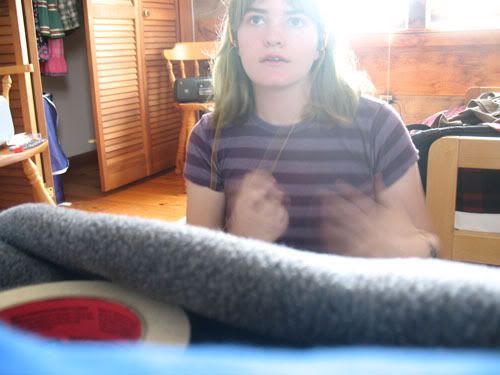
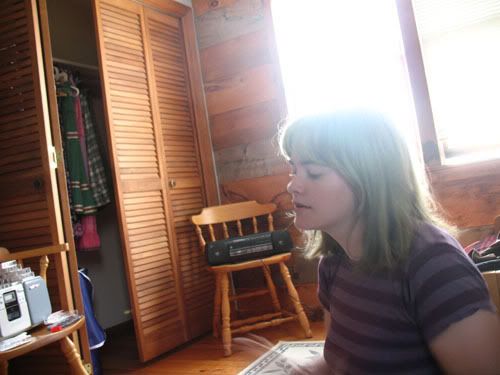
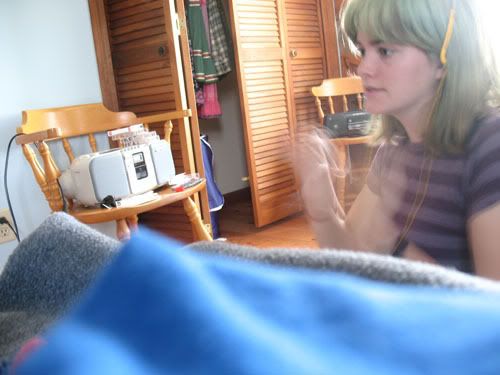
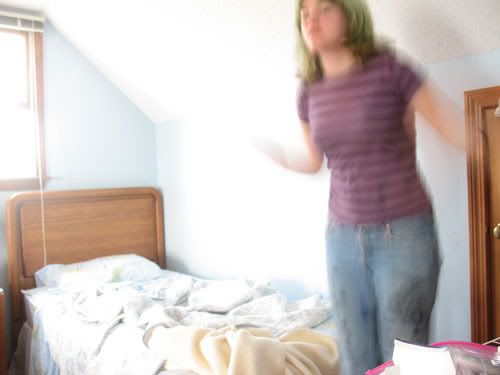
I used to really like to take pictures without flash in dim environments, so that I could do things like make myself have two faces (my ghost pictures). I also liked taking pictures of myself stimming because it looked like I was flying or disappearing. I don’t have much skill but you don’t need it.
I would really like to take pictures of people with developmental disabilities stimming, especially blurry pictures so that the images come off as kind of beautiful and otherworldly. Stimming is always portrayed in a really clinical medicalized context and it’s usually treated as “abnormal” if not outright bad (and it’s usually treated as bad). There are no images of people stimming that portray the people as beautiful. I’d like to take beautiful pictures of stimming for the same reason that people have to take beautiful pictures of queer people, fat people, people with physical disabilities, etc. Mainstream images don’t reflect the actual personalities and feelings of people who are different.
I am really concerned about how to do this though because I don’t want to do the project unless I can include pictures of people who have a range of abilities. People with severe disabilities are the people who are the most vulnerable to being treated horribly for stimming. They are also What Passing People Are Afraid Of when we feel instinctively ashamed about stimming when we’re growing up. Disability is stigmatized and kept out of sight so that people who aren’t obviously disabled are terrified of people who are, and of things that make us look like them. Leaving “those people” out would be hypocritical, and a big loss since some of them are great stimmers.
It would be really easy to take these kinds of pictures of people with more severe disabilities but I guess I’m concerned about making sure the person understands and agrees with the idea of the project and what the project is etc. Lots of people just take pictures of nonverbal people and use them for stuff without asking and I don’t want to do that obviously. I also don't know whether it’s ethical for me to try to recruit people I’m staff for or have been staff for in the past.
I’m not interested in taking pictures that are accurate, I’m interested in taking pictures that make the subject look attractive and cool. I’d like the people in the pictures to pick out the stimming pictures of them that they like the best.
The summer after my freshman year of college I took all these pictures and posted them in the Asperger's LiveJournal community.
I took these pictures because I didn't know what I looked like when I was stimming and I assumed it probably looked scary. As soon as I started taking them, I realized it looked sort of cool, at least in pictures, so I took a lot more.
Before, I didn't have an image of what a person who stimmed could look like. I'm not saying I was raised to feel terrible about stimming because I wasn't really cracked down on by teachers and parents like some people are. But it was sort of similar to how I felt about being queer--I either heard vague negative stuff, or silence.* I saw people on the Internet saying it was okay but I had trouble applying that to my real life.
The next summer, I wrote this piece: Functional Stimming. It was mostly a reaction to anti-stimming attitudes at the school, but I tried to approach the issue of stimming in an objective and accessible way. I took pictures of myself stimming and described how I felt about stimming, and I talked about two people I knew who stimmed, and included pictures of them.
Towards the end, I said:
I don't feel great about the way I stim. I wish I could stim the way Clayton does; it seems so natural and unselfconscious, just an intense expression of his feelings. I feel like I have a stimming habit, like I binge on stimming. It feels like an explosion and I feel worn out afterwards.
I remember other kids making fun of me for shaking my knees back and forth in class and compulsively touching my nose while I was reading. I don't know if that's how my stimming got driven underground. I just very much wish that instead of being this giant, dramatic, embarrassing thing, stimming could just be part of my life...
I just went and walked in circles for a few minutes trying to get my thoughts together. That was really nice. That's the kind of stimming I would like to do--calm. Something that makes my thoughts make more sense instead of ratcheting them up to fever pitch.
That summer I also made some videos like this:
One night I got stuck in the city with a headache and some general spaced-out-ness and was really screwed in terms of finding a quick subway train back to Grand Central. Last summer was the first time I really started understanding subways at all, and I'm still not very good. So I ended up riding around a lot and it was really late at night and I remember being really proud because I knew I would eventually get home even though it was hard, but I also was feeling unpleasant in other ways because it was loud and hot and I had a headache. I was thinking about Danny because I was seeing him every day and he loved subways. Thinking about Danny always made me think about passing and stimming, so I started stimming while I was waiting for the subway and it made me feel better.
And I had a horrible year in general and I became much more conscious of times when I needed to flap my hand by my side or scrape my palms along the edges of tables or step my feet around in circles. It was weird because things were so awful and in many ways I felt scared because I was letting go of many standards for being normal that I'd previously held and I think I worried that if I wasn't holding myself in place, I would somehow wake up one morning and be nonverbal or something like that.
At the same time, when I went back and read Functional Stimming, it seemed that all the problems I'd had were a lot better. Stimming had become something wholly neutral or positive. It wasn't always this full-body thing that exploded out of me unconsciously when I was alone, and hyped me up more than I wanted. It was just a tool and a joy.
I'd also started to feel differently about the way I hold myself. I think it's called posturing because when I say I move stiffly I don't mean I am stiff, or something, but that I find it nice to stick out my arms and legs and hands.
This is an overdramatic version of what I mean, because I'm doing it on purpose, but you get the idea. It especially affects the way I walk when I'm really at all excited or at all nervous. I just move my legs very stiffly, which probably is hard on my feet or something, but it feels really nice. If I try not to look different, it gets even worse because I'm nervous, and it ends up just being in the legs which are moving really mechanically. (One time Amanda Baggs wrote a post which in part was a description of how she notices ASD people based on how they walk. Some of this explains well what I'm trying to talk about.)
I guess this spring it occurred to me that I'm not the only person in the world to ever hold my hands differently and I started thinking about what I was afraid of looking like. There was obviously something I was freaking out about and trying to avoid but when I thought about it I realized it just looked like the way some people with ID and ASD walk and hold themselves all the time, and it also looked like some people with cerebral palsy. Once I started thinking of it that way, it didn't seem like a bad way to hold myself, because I associated it with other people and not just me being different by myself.
Now instead of trying to walk normally and then occasionally walking really stiffly, and also having these huge full-body stim explosions when I'm by myself, I just walk in a way that is more uneven and "posture"-y and I tend to kind of burst into a run more and sort of have stiff legs and move them around in a jumpy way. Not that I don't jump around on my own sometimes when I'm excited, but it doesn't feel like a huge problem that takes up a lot of energy, it just happens from time to time. And I don't feel bad about holding my hands in a stiff/curled-up way that feels good.
Of course I have criticisms of the camp where I worked this summer because you should always be aware of flaws, but it was in many ways very cool and very different from The School, because we weren't encouraged to think of ourselves as socially separate from and superior to the campers. Staff got involved in campers' interests and senses of humor; we weren't trying to get them to copy us. To the extent that we were trying to do stuff, we were trying to make sure they liked us and had a good time with us.
This was apparent before the campers even got there, just from the tone of our training. I was already feeling pretty happy and safe a few days into orientation, when we were going back to our cabins for a break. I felt excited and as often happens I ended up running for no discernible reason. Another counselor saw me and said, "Run Forrest run!"
I have had people make shitty comments about the way I run, and although this person was being friendly I can still imagine that I might have felt embarrassed and angry to have been "caught" doing something like that. But I guess since Forrest Gump is in fact disabled, even though she probably wasn't trying to make a comment about me looking disabled, I just processed it calmly in my head: "Forrest Gump is disabled and I'm disabled and I reminded someone of Forrest Gump. That makes sense." In the moment it made me feel good.
I also just remember dancing a lot (I had never danced before) and being excited and squealing and posturing and tripping over things because I was running around so much, the whole time I was at camp. It wasn't anything to be ashamed of because I was doing my job properly, and there were lots of awesome people around who also squealed and ran around a lot and flapped and made motorboat noises. There was a moment when I remember being really excited and happy in a really disabled-looking way in front of the whole camp, and I felt sort of transcendent and like I was going to cry. It was a weird sensory experience too, and just in a lot of ways one of the best moments of my life.
One time in seventh grade, I remember walking around with my shoes untied and not caring what other kids said until one girl said, "You look like a boy with your shoes untied." Then I immediately tied my shoes. Since then I've gone through periods of really really wanting to look like a boy, and even though I don't feel that way anymore I generally would find it cool to be told that something about my appearance looks like a boy. I tie my shoes now, because I would probably trip over myself when I start RFRing, but I'd like to think I own the possibility of looking like a boy. And I want to also own the possibility of looking disabled.
This is a pretty nice thing actually. I don't enjoy passing. Just kidding, I love passing. Just kidding, I hate passing. I mean I don't know. I am likely to think people who are visibly disabled have it worse, but I sometimes really wish I was visibly disabled and sometimes I feel like the fact that I'm not is what has caused basically all my anxiety/dissociation problems.
I have a lot of what I think are probably normal issues for women my age--basically, thinking that I'm horrible-looking and combing Facebook for pictures of myself and even if it's just a picture of my arm totally flipping out about how my arm looks horrible. Or maybe I have it on a level that isn't normal. I just look at pictures and think I'm smiling differently from everyone else in the picture. My face is bigger or smaller than theirs. I'm holding my legs differently. My hands look stiff. No one in the picture looks like they're my friends. I look like I'm just lurking in the background.
I just engaged in a bunch of this yesterday so I'm certainly not claiming that I feel great about myself now but I think that my feeling shitty about myself has been reduced to a more standard level. I also feel like I have something to move towards the way other people do when I think about how I'd like to look or how I'd like to be. Because I have images of people who look like me.
This is the reason I have trouble identifying as just Autistic instead of developmentally disabled, just because lots of the people who have led to me feeling okay, and feeling like a kind of person instead of just something unclassifiable, have been people with ID and other disabilities. I've talked about this a lot. But I just realized the other day that things are feeling so much better so I wanted to tell you some more.
*I'm sure my parents would take issue with this, especially in terms of queer stuff. I know that most people have it much worse but the thing is that most of the messages I got about queerness and DD were either mildly negative, acted like it didn't exist, or were very long-sufferingly tolerant (like my high school). Which isn't terrible but does make it hard for you to actually form into an adult because you feel uncomfortable/depressed about a lot of the things that you are.
I want to tell you about Kenny. He went to my high school, which I might somewhat flamboyantly refer to as undercover special ed--but it would be more accurate to say that it was a nominal prep school that was not at all difficult to get into, with very small classes, where no one would stop you from lying down on the floor. If you had a kid who, like me or my fake friend Joan, or like Dana or Connor, was obviously not going to cut it in an ordinary school, and if you had a certain amount of money, my school offered an option besides a school specifically for kids with disabilities/mental illnesses/a history of trouble. But there were kids who didn't have any of those things, and just hadn't been able to get into a better prep school. I feel a strange loyalty to the place, although I was incredibly lonely for my last two years due to being a sexual minority who couldn't compensate. It was probably the only school where a person like me could have had close relationships with teachers, learned to succeed academically, and been involved in theater and music; so I'm grateful for that.
During my tenth-grade year they built a new arts building and from then until I graduated that's where I spent most of my time. The whole building was carpeted and there were different hallways where I liked to sit on the floor, against the wall, and write in a notebook or read. I liked the halls in the basement, near the practice rooms, or near the room where my Latin classes were. I also liked the ground floor--I liked to wedge myself in next to the radiator, or maybe on top of the radiator, I forget, but so I could see out the window. There was an anemic field between the arts building and the main high school building, which had been built when my school had less money, and was uglier.
The Dean of Students moved to the arts building and she would let some of us hang out in her office; in twelfth grade I started spending a lot of time sleeping and doing work on her couch. That is also the year that a certain group of ninth- and tenth-grade boys, who kept their guitars in her office, would sit out by the radiator where I had spent most of my time the year before. They would play songs by Pink Floyd, the Beatles, and the Who. Kenny was one of the better guitarists and he had a haunting, pale voice, that sounded like a girl's when I was asleep.
I only spoke to Kenny a few times but he is one of the reasons I became interested in meeting other people with ASD--although he didn't say he had it, he only didn't deny. I was asking him a lot of questions one day while he played "I Can See for Miles" in the Dean's office by himself:
"Hey, do you have anything wrong with you?"
"No."
"I mean, I was wondering if you had Asperger's"
"Oh yeah, well, that."
Kenny had words he liked to use, and his face was always scrunched up in a way that looked like he was in pain. One reason I enjoyed talking to him was that I would start out just seeing the way his face looked on the surface, and thinking that he must be scared, or concentrating, or something; but then I could almost see through the surface of his face, and see that he had all kinds of feelings like everyone else. And then also, of course, the more Kenny played, the more his hands scrambled along the fretboard, the more his face loosened up.
Kenny was a nice kid but what I have to say isn't really about Kenny; it's about Mrs. C., the chorus teacher, and it's about the other boys who played guitar. Kenny was just himself. The words he used were the words that the boys who played guitar would say with him, in between songs. It's about all the kids who were in chorus, because--well, I have to explain about Kenny's stimming. Kenny played a lot of instruments, although I'm pretty sure he stimmed more instruments than he played. What I mean is that while Kenny flapped and stuff, the major things he did with his hands when they were not on a real-life guitar or piano were to manically play imaginary guitars, pianos, basses, violas, and saxophones. The saxophone was the one that got the most positive response, when Kenny got so explosive in chorus one day that no other instrument was good enough and he raised his hands to his face and pressed with stunning accuracy the invisible keys, and blew. The kids in chorus came close to applauding, while Mrs. C. laughed delightedly.
Before you ask, I know what it is like when people are laughing at the way someone moves. That is not what this was. Kenny's words, his stim-instruments, and his more standard flapping and jumping were considered interesting, impressive, and cool. They were not "meaningless repetitive behaviors"--everyone could see what they were about. Backstage before a performance, Kenny flapped at the people around him and we indicated we were nervous, and excitable, too.
Not everyone gets what Kenny got--I didn't get what Kenny got, and I had the same disability at the same school--but I still like thinking about him and explaining it to myself. I think this is pretty much a beacon of how things can be, proof that a person who's different can be seamlessly integrated into the whole without smashing himself into a normal shape, and without anyone else thinking they're doing him a favor. No one was doing Kenny a favor; Kenny was awesome.
One time Kenny did Mrs. C. a favor. He and a few of the other boys were going to sing a special song in the spring concert--I think it was "My Girl," something with very close harmony. It was a small school, meaning teachers did what they could with the talent they had, and I'm guessing Kenny with his incredible precision was going to be the rock who stayed in place when other boys muddled up and down. Kenny's singing was accompanied always by, at the very least, very stiff, sharp, tall conducting movements, his hands pinched together like beaks. At the very least. On the day of the last rehearsal, Mrs. C. said, "Kenny--for the actual concert, can you tone it down? Can you keep it in?" Kenny agreed. Whenever someone tries to explain to me that people make fun of kids who stim in public, as a way of proving that such and such ableist and abusive policy is okay...I just want to show those people Mrs. C.
Mrs. C. liked Kenny's stimming.
She knew that he had to do it.
She didn't think he did it to be annoying or to make people laugh or to get attention. At the same time, if people did laugh or pay attention, she didn't think that was inappropriate; Kenny's stimming wasn't an embarrassment, it was cool.
Mrs. C. knew that some parents would be distracted by Kenny's stimming and that it wasn't part of what was considered to be appropriate behavior for a concert. So she asked Kenny not to do it--in a way that made it obvious he was doing something difficult as a favor to everyone else, not in a way that implied this was a reasonable thing to expect from him all the time.
Kenny worked hard; he sang well and stayed still for the whole set of songs and then he and his friends dashed to their seats, coming down from the risers; Kenny was grinning at his friends, rolling his eyes to show how exhausted he was, wringing the hell out of his hands.
I'm really excited because the teacher of the class I visit gave me a class picture!!
Joe is the incredibly handsome one with the white pants. Zach is the glum one. Today Stephen (the one in the gray sweatshirt) and Anthony (the standing boy on the left) and I had a really long sensory/movement interaction...well, that's such a pretentious way to put it. We played together, in a roundabout way.
When I was younger (i.e. until like a year ago, let's be totally honest) I used to think that I should become a rock star because then I could move as much as I want and no one would notice. But then when I make videos like this I spend the entire time being like "STOP TOE-WALKING YOU LITTLE CREEP!" Because unfortunately it turns out there is some sort of divide between what looks DD and what looks like someone who just really likes music (and is awesome).
Disclaimer: I know that if you're a Diagnosis Police Officer you will be like, "There isn't any toe-walking in this video! You're the most made-up Autistic person ever!" That's because I'm trying not to. I mean, I know I shouldn't try not to, but I do, and maybe as I get older I'll be less of a twerp about this stuff.
I think I can't stand the way I feel I can smash in all the doors but it's not real And I know, I know, I know, I know how you feel I know, I know, I know, I know it's not real
I think I can't help the way I am You can hate it all you want but it's the same And I know, I know, I know it's just how I am I know, I know, I know we're not the same
I'm not real and that's okay I'm really calm with my place Remember, you are always tender Remember, it doesn't mean what you think
Because no one's ever going to be endlessly alive
If my palms are the only sensitive parts I have left I will scrape them on all the doors 'Cause I know, I know I've got to squeeze it out The rest of me, I'll use it till it stops
I'm not real and that's okay I'm really calm with my place Remember, you are always tender And remember, it doesn't mean what you think
Because no one's ever going to be endlessly alive
I think I can't stand the way I feel I can smash in all your doors but it's not real And I know, I know, I know, I know how you feel But I know, I know, I know, I know it's not real
I'm a stimming person. It's one of the things I hate the most about myself.
It's also one of the deepest things in me and one of my easiest ways of loving and understanding people. I like meeting severely disabled people and being at a loss as to what they are feeling, and then being able to notice what kind of stimming they are interested in.
My friend Mike, who I used to see a lot and now don't see very much and probably will see a lot again--Mike set me on the path of being deeply altered, and it's sad because I can never explain it to him, not just because he maybe doesn't have the words, but because he doesn't understand the hate. Mike lives his life with a completely unselfconscious relationship to his stimming. It is just his body.
I hate the way I walk when people can't see me. Sometimes I get caught because I didn't realize someone was there. I also hate the way I walk when people can see me. My walk is the walk of a person who's terrified of running, jumping, bouncing--it's terribly, leadenly stiff, like my joints are made of wood.
At the school where I interned I remember (I think I've mentioned it before--I think about it frequently when I'm walking) this teacher grabbing a boy by his shoulders again and again, trying to get him to walk stiffly instead of bouncily. He couldn't keep it up and I couldn't not see it as violence. I am not very political or very educated or very confident, but I believe in stimming. I don't want people to be the way I am; I want them to be the way Mike is.
It's hard to even explain to people the way I feel about the way I move. First of all, it's hard to even show it to people at all. But then even if I can get across what I'm talking about, it seems like it's just an action, it seems like something anyone could do, and it's like--what are you talking about? Jumping up and down has ruined your life? You don't think you can ever get married because you turn around a lot when you get excited?
Then it's like something I don't even know how to say. I'm scared. I'm so scared of looking a certain way, because some of the people who can't turn it off get hurt for looking like this. Looking like this, not acting like this--being like this, not looking like this, I mean. I like calling myself a stimming person because it's not an action, it's a kind of person. It's a kind of person I still am, the deepest thing.
I want to make a post about being intellectually disabled without the intellectual disability. Which is related to my whole thing of preferring to call myself developmentally disabled instead of any autism-related word.
This is partly, as I said, because I hate the word autism. Sometimes I wonder what is wrong with me that no one else seems to hate it as much as I do. I feel like the word is very intimately tied in with the kind of mistreatment that ASD people receive from professionals. If despite all evidence to the contrary people continue to think of autism as primarily a social disability--a disability of dislocation and indifference--then the obvious way to treat people with autism is to MAKE THEM SOCIAL! But how do you do that? How do you look at a person and make them social?
Well, you try to make them act more normal. You make a list of normal things to do. And then you try to train the person with autism to do those things.
You also make a list of things not to do, like moving wrong. And if you know any people with intellectual disabilities, maybe a bit of doubt is starting to creep in, because...don't a lot of intellectually disabled people move wrong, too? NO NO NO NO. Autism is not about that! Autism is about BEING OBSESSED WITH YOURSELF! Kids with autism just move wrong because--well, it's like, the whole thing where they flap their hands over and over is kind of like how they have really strong interests! It's basically the same thing, because they don't...because they don't switch from one thing to another, they just always do the same thing!
(Except some intellectually disabled people have really strong interests. Shit.)
When I started realizing I wanted to work with DD people--I mean, not when I started wanting to do it, but when I became sure that I was going to do it--it was mainly because I realized that I'm not a person who can batter through a lot of really exhausting things, like moving right, and trying to pick up on things really fast, and then, when it still doesn't work and everyone rolls their eyes or gets mad at me or thinks I'm a lot younger than I am, then, pretending that I don't even care--it was mainly because I realized that for my own health I needed to aspire to a career where I would be spending a lot of time with people whose ways of moving and thinking were not extremely different from my own.
And eventually I narrowed that down to wanting to work with intellectually disabled people, not ASD people--not because of any particular difference between ID and ASD people, but because of the extremely different attitude in the staff who work with them. A particular ID guy, who I think and write about a lot, likes to collect fliers. The people who work at his workshop and group home try to keep him from grabbing entire stacks of fliers and putting them in a bag, but the general reaction to his excitement about fliers is amusement and affection. He was recently Consumer of the Month at his workshop; if you mention him to a staff person, they light up and say, "Oh, he's hilarious, he's great. Did he show you his fliers?"
Think about what would happen if an ASD person, in a school, group home, or workshop specifically for ASD people, expressed that level of excitement about collecting a certain kind of object. And flapped their hands and jumped around (which he also does). The reaction would not be "you're great" because ASD is conceptualized as a disorder that has to do with not caring about people or not knowing how to be with them. So the reaction would be, "There you go, doing your repetitive, antisocial behaviors."
This is why I can't work in most places for ASD people because I can't really suppress my positive reaction to "repetitive, antisocial behaviors" like stimming and being really interested in things. Also, I am prone to such behaviors myself, so it would just fuck me up spiritually and in terms of self-esteem.
I know this is a total crock of shit, what I'm about to say, because some ASD people aren't like this. But this is how I think of ASD in myself: intellectual disability without the intellectual disability. Which means, a lot of the same movements and emotional reactions as ID people, and a similar way of being slow to pick up on things and sometimes slow to get out the words I want to say, and trouble with looking after my best interests in various ways. But academically, when all the other stuff doesn't get in the way, I'm not actually intellectually disabled.
Or you can say it like this: I have an anti-learning disability. Instead of being affected only in terms of academics, I'm affected only in terms of everything else.
For a while, weren't they mostly calling us PDD instead of ASD? I really like that better. ASD is so focused, just because of the name, on this ONE THING. And I feel like sometimes I understate the social stuff, because it does exist probably, but I feel like it's not that much more social trouble than a lot of people with intellectual disabilities experience, just by virtue of being different and maybe not picking up on things as fast. It's definitely not the core issue in my experience, I don't think.
I feel like if autism wasn't thought of as being this inherent state of selfishness and indifference, life would be totally different and better for people who have it. There is a tremendous and awful amount of prejudice directed at people who have intellectual disabilities, but I feel like it isn't quite as acceptable to say that it's "heartbreaking" or "a nightmare" to raise a child with an ID. And I'm not being disingenuous because I seriously think that a lot of people with ASD are loving in a lot of ways, but people don't see it because that's not what they're taught to expect. And they also don't see joy and nonverbal communication and stuff when they look at stimming because they've been taught what to believe stimming is.
ETA: I guess I feel required to state once again that I think this characterization of autism is totally full of holes--however, I do sometimes want to wrench out some kind of narrative that will fit me, and it does fit me, even though there are lots of ASD people it doesn't fit. Rather than putting out this model to be judged as correct or incorrect, when it's clearly somewhat incorrect, I'm more trying to stake out an opposite pole from the selfishness model of autism, to turn that model on its head. I believe the anti-learning disability model makes more sense than the selfishness model, and is somewhat closer to whatever the truth is.
Okay, I got kind of pissed in class today because we were talking about bullying and people started talking about their friends and how when their friend's ex-boyfriend or ex-girlfriend comes into the room, they start pointing at them. I don't really understand the point of talking about bullying if you make the definition of bullying so broad that it's about everyone.
I raised my hand and said something like this (I didn't sleep last night, okay? I'm not doing a good job taking stuff lying down):
When I was a kid I had very dramatic physical and facial reactions to things. So, other kids would come up to me with scissors and make like they were going to stab me in the eyes. They would also goose me, lunge at me, etc. There were also verbal fake-outs where people would say things over and over that we both knew weren't true, like that they wanted to go on a date with me.
I'm not saying this ruined my life or anything, but it has had a huge effect on my ability to have physical emotional reactions to things. It's very hard for me to let myself smile or flinch or anything at the drop of a hat, especially when I'm standing up. For example when I see people I like, it's hard for me to let myself look happy. My body wants to look happy, but it stops itself. It can't just let itself do whatever it feels like. I feel overwhelmed and I make faces or just go stiff and stuff instead.
After I had only been away from that environment for a year, I had this boyfriend who I communicated with online. I had known him in real life before we started being in contact online, but once we started dating I would get too panicked about seeing him in real life or even talking to him on the phone. It was just too much. I couldn't let myself get overwhelmed by being around him. One time he made the mistake of telling me that he loved me, and I got so upset I went on this dissociation/shutdown experience for most of a day.
This is obviously much more than what I said in class. And I'm not trying to make a point. I mean, I am, but do you see what I mean without me coming out with a thesis statement? People are frequently shitty to each other but I would say that people were shitty to me in a way that led to very pervasive problems that still affect me almost ten years later. When I have little DSM flamewars or whatever, I don't think that's the same thing. I don't think anything will ever be the same thing.
I was going to tell this to Lion Face but it's not really an LF-specific story so I will just tell you. Last week I was at the doctor's office when a DD person came in. The reason I'm using the umbrella term, even though I know he was intellectually disabled and not ASD, is that the reason I read him was his body language. There are some DD people who have a really distinctive, dramatic way of walking, and I think anyone could read them, but I like to think that my reading of this guy wasn't something that just anyone could do. Without being at all critical of the intellectually disabled people I know in Ohio, who tend to dress in a distinctive way, I'll say that he didn't dress like them. He was wearing an orange striped polo shirt and khaki pants. He looked nice.
The way he moved was nice too. How do I say this? The shape of his smile, but mostly just the fact that he wanted to do things he wasn't doing. He waited for his aide to go in and talk to the nurse, and he started to twist his legs around, started to bend one of his legs up, but kind of stopped himself and put his leg back down.
His aide came out and sat down next to him. And the nicest thing happened--they looked at each other and grinned sneakily. I'd almost forgotten why I used to want to work with adults, but the potential for sneaky grinning is definitely the number one reason. (I'm probably going to work with adults because I think there's a greater need for sincere and ethical support staff when it comes to adults. But in light of recent events, i.e. Joe Cuteness, I've started feeling more reluctant about the idea of not working with kids.)
I wanted to talk to the guy, but I felt weird. His aide went over to the receptionist and he looked at a magazine. I felt like he was aware of my presence because he kept doing almost-stimmy movements with his hands, but when I looked up (I was sitting across from him) he would stop. So I said, "What are you reading?" and he said excitedly, "Good!" and I said "What's it about?" and he indicated that he hadn't really started looking through the magazine yet, and I said, "Well, what are you going to read?" and he looked through the magazine for a minute and then his aide came and got him to go up to the reception desk.
Cut to me feeling weird. Is it okay for me to bug other DD people and try to talk to them? And I mean, let's be honest--it may feel the same to me, I may feel plugged into them in a sense I don't feel with non-disabled people, but we're basically looking at an apparently normal person striking up a conversation with a person who (while almost passing when he doesn't talk) is moderately to severely intellectually disabled. Doesn't that seem patronizing, or something?
I wasn't being charitable. His way of holding himself warmed something in me. It's really, really nice to see other people who move differently--it's funny, because who knows if the way I move even looks that strange--I'm not masochistic enough to ever videotape myself walking. But it's such a deep part of me, it feels like a huge barrier between me and everyone else.
For the past year I've been mildly crushing on a straight girl I don't really know, who has a jerky way of moving. I mentioned it to Noah--I mean, he knew that I liked her, but I was saying that it was a little bit about her being awkward, both as a person and the way she walks--and he said, "Oh--I didn't know if you could tell if other people are weird or not," and I said I could, and he said, "Do you know the way you walk is a little funny--" and I said yeah.
(I guess that exchange makes Noah sound like a jerk. I don't know. I find him an easy person to be with in a lot of ways. Sometimes when I see people I really like, I stretch my hand out towards them, and when I do it to Noah he imitates me and pretends to be a deejay.)
As you might but probably don't remember, because you weren't here (except Ari who creepily went back and started arguing with me about my calculations), I one time wrote this really complicated post called the Sad Math Exercise about how I can never get married because I only want to date people with ASD, plus I'm gay, and ASD and gayness are both more common in boys which I am not, THE MISERY!
I guess it sounds like this might be a lead-in to a post about me announcing I'm in a relationship, but don't worry, that will never happen. I was just thinking today when I was at work that maybe the Sad Math Exercise doesn't have to be quite as sad as it is because I think I could date a regular person if they had cerebral palsy.
Like, I think the main issue is really my physicality--okay, part one, I think it's harder to communicate with someone who is not a stimming person, but part two, it's just very uncomfortable to be a woman who moves like I do and I spend a huge amount of time feeling jealous of guys for being allowed to move stiffly or bouncily when I have to constantly feel terrible about myself because of the way I walk and feel like I'm so much worse than practically everyone I know just because I'm stimmy and sometimes trying not to be stimmy and my proprioception is terrible so all my movements are very dramatic. I think that it would be nice to have a relationship with a person with CP because I would be able to go places with them without unfavorably comparing my movements to theirs.
However, while I was thinking this when I was at work, I was sort of backing it up by being like, "the one person in the world I feel terribly, easily close to is a person with CP, so maybe there's actually a specific body language overlap," and then I got all excited and was drawing ASD + CP = true love forever on the imaginary tree in my head
but then I was in class and my friend called me like eleven times, it was really awkward, and when I called him during the class break he started yammering about how he took the Simon Baron-Cohen test and I was like, "buddy, you don't need to have autism, I still like you," but then he started listing the billions of things that he read that prove his ASD, and telling me about his mom's problems when she was a kid, la la la, and I started, somewhat gloomily, to sink into the belief that there was no magical ESP connection between our disabilities and that the reason I like him so much is just that he's really been like me all along.
It's sort of depressing. I'd like to believe in fluidity, or love or something. This doesn't really discount my Math Exercise though, it still makes sense even without this particular experience to back it up.
PICTURE NOTE: as a lot of us probably know, Photobucket has recently stopped allowing people to hotlink images. For the first few years I was using this blog, I used Photobucket to host most of the images, so now they will not be visible! Until Photobucket goes under, as I imagine it will, you can at least see the images by opening them in a new tab.