21 November, 2009

They hate you. Yes, you.

I always think about Danny, who was not really named Danny. It's too bad I can't use his real name because it's one of my favorite names. I'm sure he's forgotten me but I can remember his name, his face, his favorite subway train, and the words he made up.

He was a kid I met this summer at the school where I interned. I have written about him several times, sometimes at length. And although he was my favorite kid at the school, that isn't why Danny is always surfacing in my mind, tiny in his big t-shirts, flinging himself around and reciting things.

It's through Danny that I found out for sure, this stuff is about me.

Because the first thing people use on us is always, "It's not about you." When I was a kid, when I first started reading about autism rights, it was so instinctive: of course it's wrong to say "cure autism now." Of course it's wrong to say autism is a tragedy, a disease, it's wrong to give kids electric shocks, it's wrong to say you thought about killing your kid in a video about eliminating autistic people from the gene pool. Like Sinclair says it's wrong to mourn for a living person. All this stuff was plain and clear and bright, and I was autistic, and I was being attacked.

Right?

Well, not to anyone else.

Because, of course, if I told anyone I was autistic, they said I was lying, or I had a different kind of autism that made me smart and talented, so I wasn't like Those Kids, the kids who needed to be cured. And that I should think about their parents, about the money and time to care for a person like that, about the dreams that are shattered when your kid is really autistic, not smart autistic, the real kind. So in my late teens when I put myself through my paces, when I figured out my deficiencies and set myself to systematically eradicating them, one of the deficiencies I eradicated was my use of the word autistic. Because you shouldn't use words people don't understand. And you shouldn't use words that will make someone feel bad, someone who has a kid who's Really Bad, Really Disabled. Because you're not that.

And I met some autistic kids and they were not much like me, and I didn't know to apply what I knew about myself to them, because I couldn't see what they were feeling inside. But I liked them. Then I met some people with intellectual disabilities and I liked them too; after a brief nervousness because some of them looked so different from me, and made noises I didn't understand, it was easy to like them. They were people who liked things, some of them the same things I liked. I could see that they weren't on the surface very similar to me, but I liked being around them almost more because of that, because it made me feel happy and chastened to misjudge them again and again. To be proven wrong when I thought I could quantify them just because I knew more words.

So by this point, I was pretty much sold, even if I wasn't Really Autistic, on the idea that people with developmental disabilities matter. Because I was around them all the time and it was obvious they mattered. But still, I felt my position was that of an outsider, an ally. I had opinions but I didn't necessarily feel that I had much right to talk about them; I didn't feel I had as much right as the parents or teachers of people with developmental disabilities.

And then I interned at this school.

And I started out thinking: wow, ABA is so cool. I've heard negative things about it from other Not Really Autistic people, but who am I to talk about what these Really Autistic kids need? They can't even talk. They might bite themselves or something. What the hell do I know about that?

And then I met Danny and the other kids in his class. High-functioning kids. Verbal kids.

Tony, who had been nonverbal a few years before, was incredibly hardworking and sweet. When he went into the school director's office and turned out the lights as a joke, I laughed, but she said, "Tony. Look at my face. How do you think that made me feel?" She stood there looking grim until he apologized.

James was stressed out and upset; one of his teachers leaned towards him, staring fiercely into his eyes, talking with cold, strained-sounding words, the kind of voice I called "static" when I was a kid. James looked scaredly back at her, wriggling his hands around in his lap. "James," she said. "I know you're upset. But what you're doing with your hands looks silly." This boy, all the tension in him being channeled into something harmless, something she had to look under the table to see. His tension was silly. His discomfort was an inconvenience. He was eight or nine years old.

And Danny with his words. "Danny's an interesting kid," the school director told me. "He likes to be in charge." Danny and I were walking, holding hands, and when I responded with concern when he told me he was tired, another teacher told me, "He's playing you." It's true that Danny was a bossy little boy; when we played restaurant, he replied, "No, we're out of that" again and again until I ordered the food he wanted to pretend to make. And his love of subway trains spilled out everywhere. He was supposed to write a story about a sad princess, and he did, but half the story was about the princess's friends taking her on the subway to cheer her up. He was supposed to write a crossword puzzle and the clues were things like, "Transfer is available to _____ North." The school was full of subway maps, since many field trips involved subways, and Danny would sometimes just lean over a desk, pressing his face into the shapes and colors, whispering his favorite schedules to himself.

Danny just liked words. When he was using his special words, the weird words he scrounged for or made up himself, he would find himself jerkily hopping across the room, speaking in a squeaky voice, his small face tense with excitement. "Presentation" was a weird word for movie, "document" was a way to talk about the letter he had typed on the computer for his parents. "I went to the barber," he said when I commented on his newly short hair, and then, with a rush of joy, "but I like to call it the hair shop!"

I like words too. It was hard to watch Danny's teachers nudge him, sit down with him, say, "Danny, the word 'presentation' is a little weird; you need to say 'movie.'" It was hard to watch the way they looked at him, pointedly, until he stilled his hopping and lowered his voice to a more standard pitch. When Danny found out my middle name is Wood, he completely tripped out on it, hammering pretend nails into my stomach and giggling, "I'm gonna build something out of you!" "Danny," a teacher said, "don't be weird. You and Amanda were talking about names."

It was the word weird. Nothing foreign my whole life. Tracing words and shapes in the air, crossing myself, my mom asking me a lot of questions, "Have you been feeling the urge to do that lately? Why do you do that?" with so much static it was clear I'd better keep my hands as still as possible when she was around. Running jerkily up the stairs at school, I couldn't help myself until I was fifteen or sixteen, despite the older boys laughing to each other--"is she trying to race you?" Movement just consumed me that way. And being a thirteen-year-old who said "suppose" and "quite" when no other kids did. Just loving words too much, finding it hard to stay away from the strange ones. And getting too excited. Being weird is not that alien for me.

So my divisions broke down a little, because I was watching a kid just like me, and I was learning, in very specific, qualitative terms, what they thought of people like me. I was so nervous about keeping myself still and using the right words because I thought they wouldn't let me intern there if they knew I was actually like Danny, that I didn't think he was weird at all. All of Danny's teachers had been taught to grimace and say how annoying it was when he talked about trains. They watched The Office, but they never ever laughed when Danny told flat, self-referential jokes on purpose, twisting the ones he had been trained to say. I thought Danny was funny. Every time I talked to him I felt nervous about doing something that his teachers would think was wrong, and I also felt bad about perpetuating the attitude he was being taught, that none of the things he loved mattered.

So from specific to general, from Danny to James and Tony, to Max and John. John's teacher made him walk, in stiff, clean steps, and if he started doing anything that looked like skipping or jumping, she grabbed his arm, said "No," forced him again and again. Max liked to move his arm in circles while he was watching TV, so he was hauled off into an office, pushed down into a chair, had mouthwash forced into his mouth while he cried. They told me they were narrowing it down, he was moving less and less. Max and John didn't talk. James and Tony didn't talk as well as I do. But I move too much, and I move wrong, especially when I was a kid, and in that school I saw what they do to kids who move wrong.

I realized that, actually, a lot of it was about moving wrong. Or talking wrong, if you could talk. Or just taking too much initiative--wanting to make up songs, like Danny did, or playing a practical joke, like Tony did. That these kids looked and acted different and the school wanted to control them and make them as still and docile as they could possibly be. Watching them treat hopping, rocking, and neologisms like you'd treat a bomb on an airplane--it was like being at summer camp with a kid from the south, sitting in a car uncomfortably while he said he'd kill a gay person if they ever came near him. Wanting to say, no, it's not anything important; I'm like that, see? But I didn't talk in the car and I didn't talk in the school.

This is too long. It's hard to even explain it. I just have to say, for the millionth time, that this whole functioning level thing--yes, it matters in certain ways. I can buy and cook food for myself, while a severely autistic person probably can't. I can hide the way I move and talk better than other people can. But this doesn't really have much to do with politics, because when people claim that "cure autism now" and the disease and the Judge Rotenberg Center are not about me, well I beg to differ. The only reason they're not about me is that I'm old and verbal enough to not be vulnerable to that kind of abuse. They would be all too happy to practice it on me if they could. Autistic people do not get abused because they are low-functioning, they get abused because they do weird things.

So, the old-school ABA trials? With Lovaas?

This is a kid getting an electric shock:
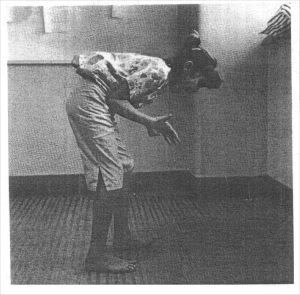


This is why:
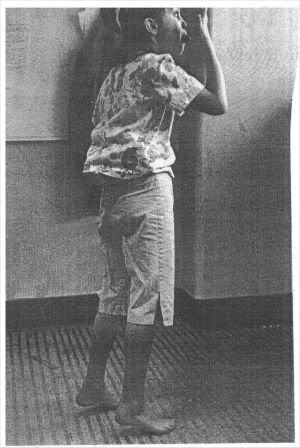


If you were in the wrong place at the wrong time, the wrong age, the wrong functioning level, this could be your life. This what people like them think about people like us.


20 November, 2009

Okay

so maybe it is not the country.

I had to do a presentation in my art history tutorial and I was able to more or less bullshit my way through it and exploit my general medieval and church history obsession and my very messy (but better than my classmates') understanding of Islam, and my tutorial teacher joked with me and stuff. Now I'm in a good mood. I think the problem here, though it does stem from how anonymous UK education is, is not really about the UK in itself; it's more just that I feel like I'm not really expressing myself or connecting with anyone.

Part of this is the lack of snow, and feeling embarrassed whenever I open my mouth and say everything wrong--my church history teacher pronounces controversy "con-TRA-vussy," how beautiful is that? But it's also just how the school is. People skip classes all the time and never ever seem excited about things. But they don't even seem like they hate class either, which would be something. They're just there like they work in an office.

The other day I dreamed I was home. It was pretty cool. But hopefully I will continue to talk in art history tutorials in the future, which feels like wiggling my toes, helping myself concentrate on reading by slamming my hand through the air, spelling out words with my fingers when I was a kid. Movement wakes up my brain.

Europe

Dear self, I hope I don't die, especially not on the plane home (well I like planes so I actually would mind that less than anything). This summer I would always think about what if I suddenly died. And I always thought it would be okay. Now I think, always, shit, please let me get home before I die. When I was a kid, before God, when I was really scared of dying I'd imagine that the years I'd already lived were this sort of weight keeping me alive. I've lived eight years, I remember thinking; that's something. Which doesn't really make sense. Unless you're a baby in the Middle Ages, you get more likely to die the older you get. I'm closer to it now than I was at eight, especially if I die at the age of 21 hit by one of the infernal Lothians Buses. I might just be paranoid and lonely, but I always think the people riding in the Lothians Buses are staring at me. I wonder if they can tell I don't belong.

I was not patriotic before, I know I live in a country of ugly money and too much sun, but please God deliver me and drop me back into the mass of it, America, dirty and self-centered and out of control and utterly divorced from any past. I can't stand walking down streets that have been here forever.

19 November, 2009

More Mad Men (do I ever stop?)

I'm having a boring argument on Television Without Pity about how Trudy is "enabling" Pete or whatever. I didn't even know how to properly argue about this because enabling is this word with a bunch of connotations that don't actually have to do with the definition so you can't just look it up in the dictionary and argue against that. Because enabling technically means making someone more capable and prepared for things, which is what Trudy is doing. But the way this person means it, I think, is that Trudy is shielding Pete from the consequences of his actions, and (in the poster's words) treating Pete like he's her child.

Okay, number one, who cares if she's treating him like her child? They both seem to like it. They both seem to be doing a lot better than they were in seasons one and two. What's the problem? It's weird? You wouldn't like it? Well, awesome, nobody's forcing you to have that kind of relationship.

Number two, this person seems to have this attitude that help is something you should get because you're a good person and you deserve it, not because you need help. I said, "Pete clearly has some kind of social impairment and has a lot of trouble controlling his emotions, I'm glad Trudy is helping him because he seems to be doing a lot better." The person said, oh, so Pete needs Trudy to keep him from committing rape and adultery?

Well...apparently. I guess I would argue that a combination of ASD and growing up with lots of privilege but no love (actually someone said it really well the other day--Pete was raised to believe that he's entitled to everything, but doesn't deserve anything) have created a person who has a very hard time relating to people, caring about them, understanding cause and effect/delayed gratification, and containing the pretty massive amount of rage that arises from his feeling that he has no control over his life. So, yeah, it's not that unbelievable to me that Pete needs Trudy--a person who genuinely cares about him and understands him, and has very good social skills and can explain to him what's going wrong--to keep from doing things that are fucked up.

Hopefully this won't always be the case. He seems to me to be growing up. He didn't yell at Pryce in 3x12 for example. He is displaying actual affection and loyalty and stuff to Trudy, which makes me flail my hands around with excitement. PETE IS BEING A PERSON!! YAY!!

But, according to this TWoP individual, Pete doesn't deserve to get the help he obviously needs in becoming a person, because he isn't a person now. Okay, cool, he doesn't deserve it, but can't we just be happy for him and the people around him? Trudy wouldn't be wrong to tell Pete he's a shit and she wants nothing to do with him, but everyone else already tried that and it didn't work. Not helping people who need help may be fair in an Ayn Rand sort of way, but I can't bring myself to criticize Trudy for being willing to help Pete grow up.

About being antagonistic and harsh and us vs. them

Because I was reading a conversation on a LiveJournal community for PWDs where people were talking about how non-disabled people don't mean to oppress disabled people, and disabled people shouldn't be so bitter and think of non-disabled people as the enemy, etc. etc. I also had a conversation with a non-ASD guy on one of my YouTube videos where he responded to my points about non-ASD people making a big deal of ASD people's needs by saying that I was overapplying my own experience, and most people are usually happy to help if you tell them there's a problem, etc. etc. And that I shouldn't group people and stereotype them and make statements about "what non-ASD people do."

So, okay, here we go: I'm a Christian. I love everybody. I'm also an apologist, not just in terms of Christianity but in general. If someone says something that I think is offensive, I will never, ever yell at them or be rude; I will try to engage with them and explain why I feel the way I do with examples and arguments that are neutral. In real life, sometimes I get overexcited because I like explaining so much, and it comes off like I'm angry because I'm talking more loudly than I usually do, but I'm not really angry. And on the Internet, I've had a few really cool experiences where people told me that I actually changed the way they thought about something and they appreciated that I took the time and energy to explain what I thought.

Also, probably because of my ASD, I do not spend a ton of time talking contemptuously about the way other people speak and what they speak about, or the way they dress, or whatever. Okay, this is probably a lie, but I don't want it to be. I guess that I am actually pretty harsh (inside my head and behind their backs) on people who seem to have a really easy time in areas where I don't have an easy time. On the other hand, I get along better with people who are considered "obnoxious," or have unpopular political opinions, than almost anyone I know.

And, finally, I think I have written before about how the idea of being myself or doing what feels right is completely foreign to me and I have no idea what the fuck it means. If I was able to figure out how to be myself, and was stupid enough to do it, I think I would screw up class discussions, possibly get arrested for suspicious behavior and/or violence, and definitely have people yelling at me out the windows of their cars every time I went outside. And some other stuff. I don't think about being myself very much. I think about how to be standard, or at least standard deviation. I think about how to get by, about how to fit myself into the structure of the world. And if someone doesn't know this about me, it's because I don't feel the need to tell everyone about it all the time, but that doesn't mean it's not true.

The oppression of people with disabilities is something I am very interested in and examples of it are very apparent to me, all the time. So I think about it, and write and talk about it when I get the opportunity. I don't think it is okay to do and say things that are ableist, and when I have a chance, I point them out.

But this doesn't mean anything about who I am as a person. For example, I recently had a conversation with a guy who was saying that intellectually disabled people depress him because they can't do anything worthwhile with their lives. I didn't yell at the guy or even feel internally that I hated him for saying something like that, because I didn't hate him at all. I liked him well enough. I like almost everyone well enough. At the same time, I thought that what he'd said was extremely offensive, and I did some writing and thinking about it later.

I am a reasonably nice person and I don't think that non-disabled people and/or ableist people are The Enemy and I don't spend my time walking around consumed by rage, and this is not at all inconsistent with the fact that I am very conscious of ableism and want to fight it. I'm mad at structures and ideas, not people.

18 November, 2009

Rewatching the Regular Pete Campbell Show

"She kept looking at the maps and talking about all the places we were going to go...but we never did."--Pete's story about sex

AMAZING.

(Pete calls Don "buddy" and tries to shake hands with him.)
Don: Slow down, I don't want to wake up pregnant.
Pete: fuck you.

AND THE FINEST SCENE EVER:

(Peggy looks around awkwardly as Pete comes over to her in his giant neon suit and then smiles at him for a really long period of time.)
Pete: I'm back.
Peggy: I see that.
Pete: So...I should be on the list for the meeting.
Peggy: Oh! I just...didn't know when you were coming back.
Pete: Right... (in a weird jolly voice) Yeah, well, it's today, here I am! (creepy fake laugh)
Peggy: They're all in there already. You can go in.
(Pete shuffles around awkwardly and Peggy looks up at him with a repressed amused/happy expression on her face. I think. That's how I would feel, at least.)
Pete: Peggy--when I came over, that night, you know, before...
Peggy: I was there. (Awesome! I love that Peggy is only funny with Pete. This has actually more or less continued to be true, except she's funny with her mom and sister sometimes. The rest of the time she's an AWKWARD TURTLE.)
Pete: You know...I'm married now.
Peggy: I know.
Pete: So...
(AAAAWKWARD. Pete stands there looking like an 8-year-old. Peggy looks at him for a while.)
Peggy: (very slowly) Pete. I understand. It never happened.

People act like when Peggy had a crush on Pete she didn't understand what a loser he is but I absolutely don't think that's true, I think she has always found him unintentionally hilarious and she used to be in a position where she could afford to appreciate that, but she isn't anymore because she had to grow up and he didn't.

(Then Pete goes into the meeting and makes a joke and when everyone laughs, he looks like super awkwardly pleased with himself and rolls his little shoulders around. I love this show.)

Final Thoughts on Video Game Pete Campbell

So, I finished the Video Game Pete Campbell Show the other morning. Because I watched it all out of order, the last episode I watched was the season three finale which led me to ponder the question, didn't Connor smell like Holtz after hugging him and decapitating him and stuff, and if Angel is always able to snarkily announce that people are having sex with each other, shouldn't he have been able to realize that Connor was lying when he said he hadn't seen Holtz. WHATEVER ANGEL YOU ARE TIRESOME.

All-in-all, I enjoyed VGPCS. Angel was obviously beginning to fall into the slump that Joss Whedon lets everything fall into when he gets distracted by something else, but it's not like later seasons of Buffy or anything like that. It's certainly enjoyable to watch.

On Basket of Kisses, the very best Mad Men website, they once had a post that was like "how can Vincent Kartheiser have been so incredibly terrible as Connor/Video Game Pete Campbell, and yet be so delightful as Regular Pete Campbell?" Okay. I take issue with this. I enjoy VGPC but he has to be the most repetitive, underdeveloped character in the history of the world. I think VK at least makes him interesting to watch. On Basket of Kisses, someone was like "I didn't think Connor acted like he was in pain." Well, what would that even mean? I'm sure he wasn't raised to go around crying all the time. The way VK moves and talks on Angel is so odd and that alone gets across the pain for me; like, the way he reacts when people touch him, and just his general quality of not really being there in the same way as everyone else.

I sort of think VGPC should have surprised everyone with his goodness at the end of season four, which has nothing to do with me being attached to him. In fact, when I watched the Jasmine episodes (remember I was watching the show out of order), I was like "oh, this is so cool, everyone thought that Angel's crazy son was okay now, but he's actually still pretty unbalanced in a way that no one suspected, and now he's all of the sudden their enemy because he thinks that Gina Torres eating people is a good time. Oh wow, Angel's going to have to kill him because he's crazy, this is so sad."

But then when I went back and watched more season four episodes, I was like wait, this is what his character was like for the whole season. He was just like "I'M CRAZY AND I'LL DO ANYTHING FOR ATTENTION." It got to the point that when Cordelia would be like "Of course I love you and think you're special, now go kill a baby" I would just start laughing because it was like "Oh Connor, there you go again." Like, when Connor totally goes along with all her evil plans, are you supposed to be surprised, because I can't imagine being surprised the way he's characterized the whole season. I just think it's unfortunate. I was so excited to watch the Video Game Pete Campbell show, but it turned out to be one episode repeated 26 times.