I have an imaginary friend named Max. He resembles me and some of my friends, but not as much as I would like. When Max was growing up there was concern because he was incredibly disorganized and spacey. He spent hours on the Internet. He zoned out when people were talking to him. He got confused about coming up with plans and taking initiative.
But look at Max now! He goes to college and gets good grades. Or he's done with college and has a pretty good full-time job. He lives on his own. He does all these things that his parents and teachers thought he would never be able to do. And it's not because he's "recovered," because he still sucks at all the same things.
I know that when I say Max does things that are really hard for him, it sounds like I'm creating a supercrip narrative about how he is just wearing himself down to the bone doing difficult things, and you should too. And some people who know Max do talk about him that way.
But Max has a secret: he skips to the end or slides into home plate at the last minute or wrangles things out of people so that he can get stuff done despite having no executive function to speak of.
The mainstream reaction to this would be to say that Max is a bad person and if he was a good person he would try harder to get things done on time. However, he tries really fucking hard. That's what everyone with executive function problems does, because no one accommodates them because there's been very little study of them so most people don't realize they're even a part of autism, and it's hard enough to get accommodated for things everyone knows about. Seriously. No one wants to be at a point where executive dysfunction is affecting their life. Max, and I, and everyone, are working as hard as we can. It's not enough.
You have to cheat. Ask for as many extensions on papers as you possibly can. Pretend your computer is broken. Use your charm if you have any. If you're going to cry, don't wait until you're out of the room--do it where the people in power can see you. Eat the same food every day if you can't think of anything else to make. Put other things ahead of taking a shower, even if your mom said you have to take a shower every two days. Sometimes people won't notice you're cheating but even if they do and are annoyed you might still get by.
My mom goes to workshops for people with ASD and then gives me the really long printouts that go along with them. The printouts tell me to sit down and make a list of everything I have to do. When I am anxious, as I have been this year, it's hard to think about these things so I hold on to the printouts out of guilt but don't actually read them. Then my mom finds them and gets upset that I haven't read them and says that I'm not ready to live on my own.
But I am ready to live on my own. Badly. Just like I can hold down a full-time job. Badly. Just like I am getting my homework done. Badly. And I forget to balance my checkbook, which none of my non-disabled friends do because you can get it online, and my mom says, "Well it's different for you because they would be able to do it if they needed to, but you wouldn't, so you have to do it." Theoretically I understand this is true, but my checkbook remains unbalanced.
Which is bad. And I feel bad. I do! At this rate I'll never be able to go to college. But I do go to college. At this rate I'll never be able to have any friends. But I do have friends. I just don't do everything right with them all the time.
This blog is a vice. It is something I have used in the past to avoid doing work or looking after myself. Sometimes trying to force myself to do work or look after myself makes me anxious or upset. So I've also been using this blog to avoid self-injury, in a roundabout way. I'm Somewhere Else is a bad, bad business. However, when I forget its context I feel kind of proud. To someone who doesn't know me, maybe it seems like an accomplishment.
For people whose lives are controlled by executive dysfunction, I firmly believe the difference between getting stuff done and not getting stuff done is not caring about doing things right. You cannot always make a list all the time and be early for everything. You just can't. Hopefully you're good-looking or funny or you remind someone of their niece. Exploit all opportunities. Do not do what people who are not disabled tell you to do (unless you want to, of course).
All too often I find myself waiting for the day when I can do shit properly, which more or less amounts to waiting until I'm not disabled anymore. Then I can feel good enough to deserve everything I want. Well my cure is slow in arriving, so I'm just going to do everything I want now, if that's okay with you.
31 August, 2010

It's true that everyone will be disabled. But everyone will also depart from being heteronormative at some point, and that means fuck all to people who are actually queer or trans all the time. It really warms my heart to see trans people whose lives are actually affected in a big way by being trans snarking on college students who don't believe gender is real and use trans identity/presentation as an accessory to be donned and dropped. And I've been in environments where talking the way I'm talking is seen as a shitty thing to do, but I don't care. Sure I'm policing people's identities. That's because some people's identities are stupid.
I remember being told that disability is the one identity category we will all embody, but that is not true. Or sure it is, if you stretch the word disability until it's meaningless. But right now, a lot of people are spending a lot of money to try to find the gene that makes people like me, and if that isn't the case for you, you can shut up and stop telling me that disability is ~socially constructed~. Only you would think that proving something is socially constructed is the same as proving you and I are equal.
I remember being told that disability is the one identity category we will all embody, but that is not true. Or sure it is, if you stretch the word disability until it's meaningless. But right now, a lot of people are spending a lot of money to try to find the gene that makes people like me, and if that isn't the case for you, you can shut up and stop telling me that disability is ~socially constructed~. Only you would think that proving something is socially constructed is the same as proving you and I are equal.
28 August, 2010
stimming photo project idea
(This will be like a million years in the future if I do it, plus there are ethical issues so it might not be possible, but I just thought it was a really good idea so I wanted to share.)
I used to really like to take pictures without flash in dim environments, so that I could do things like make myself have two faces (my ghost pictures). I also liked taking pictures of myself stimming because it looked like I was flying or disappearing. I don’t have much skill but you don’t need it.
I would really like to take pictures of people with developmental disabilities stimming, especially blurry pictures so that the images come off as kind of beautiful and otherworldly. Stimming is always portrayed in a really clinical medicalized context and it’s usually treated as “abnormal” if not outright bad (and it’s usually treated as bad). There are no images of people stimming that portray the people as beautiful. I’d like to take beautiful pictures of stimming for the same reason that people have to take beautiful pictures of queer people, fat people, people with physical disabilities, etc. Mainstream images don’t reflect the actual personalities and feelings of people who are different.
I am really concerned about how to do this though because I don’t want to do the project unless I can include pictures of people who have a range of abilities. People with severe disabilities are the people who are the most vulnerable to being treated horribly for stimming. They are also What Passing People Are Afraid Of when we feel instinctively ashamed about stimming when we’re growing up. Disability is stigmatized and kept out of sight so that people who aren’t obviously disabled are terrified of people who are, and of things that make us look like them. Leaving “those people” out would be hypocritical, and a big loss since some of them are great stimmers.
It would be really easy to take these kinds of pictures of people with more severe disabilities but I guess I’m concerned about making sure the person understands and agrees with the idea of the project and what the project is etc. Lots of people just take pictures of nonverbal people and use them for stuff without asking and I don’t want to do that obviously. I also don't know whether it’s ethical for me to try to recruit people I’m staff for or have been staff for in the past.
I’m not interested in taking pictures that are accurate, I’m interested in taking pictures that make the subject look attractive and cool. I’d like the people in the pictures to pick out the stimming pictures of them that they like the best.
27 August, 2010
Run Forest Run: about movement and love
The summer after my freshman year of college I took all these pictures and posted them in the Asperger's LiveJournal community.
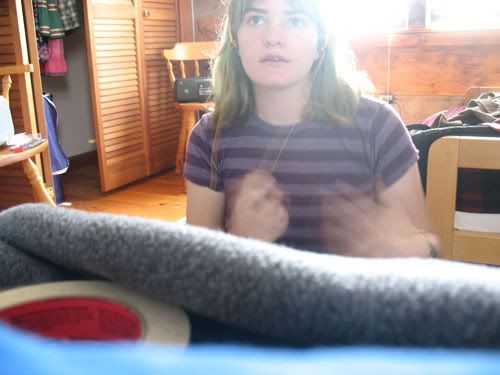
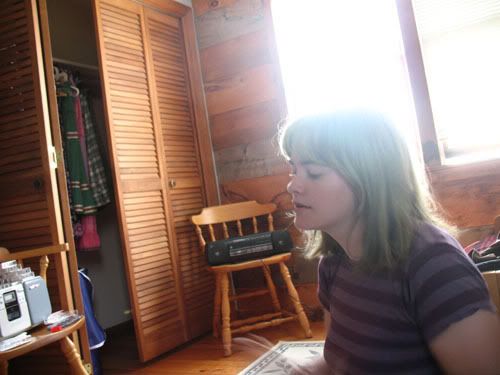
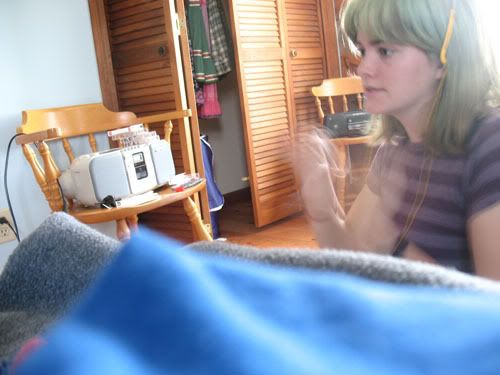
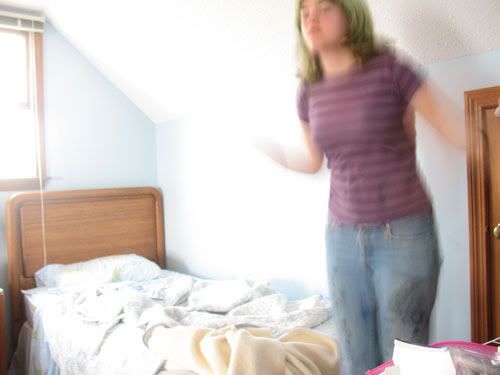
I took these pictures because I didn't know what I looked like when I was stimming and I assumed it probably looked scary. As soon as I started taking them, I realized it looked sort of cool, at least in pictures, so I took a lot more.
Before, I didn't have an image of what a person who stimmed could look like. I'm not saying I was raised to feel terrible about stimming because I wasn't really cracked down on by teachers and parents like some people are. But it was sort of similar to how I felt about being queer--I either heard vague negative stuff, or silence.* I saw people on the Internet saying it was okay but I had trouble applying that to my real life.
The next summer, I wrote this piece: Functional Stimming. It was mostly a reaction to anti-stimming attitudes at the school, but I tried to approach the issue of stimming in an objective and accessible way. I took pictures of myself stimming and described how I felt about stimming, and I talked about two people I knew who stimmed, and included pictures of them.
Towards the end, I said:
I don't feel great about the way I stim. I wish I could stim the way Clayton does; it seems so natural and unselfconscious, just an intense expression of his feelings. I feel like I have a stimming habit, like I binge on stimming. It feels like an explosion and I feel worn out afterwards.
I remember other kids making fun of me for shaking my knees back and forth in class and compulsively touching my nose while I was reading. I don't know if that's how my stimming got driven underground. I just very much wish that instead of being this giant, dramatic, embarrassing thing, stimming could just be part of my life...
I just went and walked in circles for a few minutes trying to get my thoughts together. That was really nice. That's the kind of stimming I would like to do--calm. Something that makes my thoughts make more sense instead of ratcheting them up to fever pitch.
That summer I also made some videos like this:
One night I got stuck in the city with a headache and some general spaced-out-ness and was really screwed in terms of finding a quick subway train back to Grand Central. Last summer was the first time I really started understanding subways at all, and I'm still not very good. So I ended up riding around a lot and it was really late at night and I remember being really proud because I knew I would eventually get home even though it was hard, but I also was feeling unpleasant in other ways because it was loud and hot and I had a headache. I was thinking about Danny because I was seeing him every day and he loved subways. Thinking about Danny always made me think about passing and stimming, so I started stimming while I was waiting for the subway and it made me feel better.
And I had a horrible year in general and I became much more conscious of times when I needed to flap my hand by my side or scrape my palms along the edges of tables or step my feet around in circles. It was weird because things were so awful and in many ways I felt scared because I was letting go of many standards for being normal that I'd previously held and I think I worried that if I wasn't holding myself in place, I would somehow wake up one morning and be nonverbal or something like that.
At the same time, when I went back and read Functional Stimming, it seemed that all the problems I'd had were a lot better. Stimming had become something wholly neutral or positive. It wasn't always this full-body thing that exploded out of me unconsciously when I was alone, and hyped me up more than I wanted. It was just a tool and a joy.
I'd also started to feel differently about the way I hold myself. I think it's called posturing because when I say I move stiffly I don't mean I am stiff, or something, but that I find it nice to stick out my arms and legs and hands.
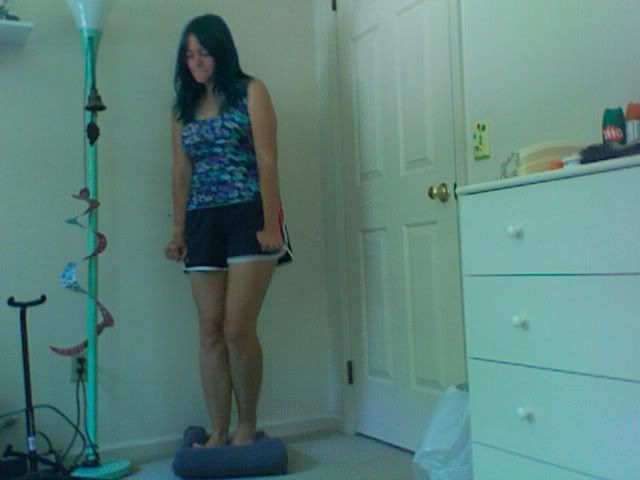
This is an overdramatic version of what I mean, because I'm doing it on purpose, but you get the idea. It especially affects the way I walk when I'm really at all excited or at all nervous. I just move my legs very stiffly, which probably is hard on my feet or something, but it feels really nice. If I try not to look different, it gets even worse because I'm nervous, and it ends up just being in the legs which are moving really mechanically. (One time Amanda Baggs wrote a post which in part was a description of how she notices ASD people based on how they walk. Some of this explains well what I'm trying to talk about.)
I guess this spring it occurred to me that I'm not the only person in the world to ever hold my hands differently and I started thinking about what I was afraid of looking like. There was obviously something I was freaking out about and trying to avoid but when I thought about it I realized it just looked like the way some people with ID and ASD walk and hold themselves all the time, and it also looked like some people with cerebral palsy. Once I started thinking of it that way, it didn't seem like a bad way to hold myself, because I associated it with other people and not just me being different by myself.
Now instead of trying to walk normally and then occasionally walking really stiffly, and also having these huge full-body stim explosions when I'm by myself, I just walk in a way that is more uneven and "posture"-y and I tend to kind of burst into a run more and sort of have stiff legs and move them around in a jumpy way. Not that I don't jump around on my own sometimes when I'm excited, but it doesn't feel like a huge problem that takes up a lot of energy, it just happens from time to time. And I don't feel bad about holding my hands in a stiff/curled-up way that feels good.
Of course I have criticisms of the camp where I worked this summer because you should always be aware of flaws, but it was in many ways very cool and very different from The School, because we weren't encouraged to think of ourselves as socially separate from and superior to the campers. Staff got involved in campers' interests and senses of humor; we weren't trying to get them to copy us. To the extent that we were trying to do stuff, we were trying to make sure they liked us and had a good time with us.
This was apparent before the campers even got there, just from the tone of our training. I was already feeling pretty happy and safe a few days into orientation, when we were going back to our cabins for a break. I felt excited and as often happens I ended up running for no discernible reason. Another counselor saw me and said, "Run Forrest run!"
I have had people make shitty comments about the way I run, and although this person was being friendly I can still imagine that I might have felt embarrassed and angry to have been "caught" doing something like that. But I guess since Forrest Gump is in fact disabled, even though she probably wasn't trying to make a comment about me looking disabled, I just processed it calmly in my head: "Forrest Gump is disabled and I'm disabled and I reminded someone of Forrest Gump. That makes sense." In the moment it made me feel good.
I also just remember dancing a lot (I had never danced before) and being excited and squealing and posturing and tripping over things because I was running around so much, the whole time I was at camp. It wasn't anything to be ashamed of because I was doing my job properly, and there were lots of awesome people around who also squealed and ran around a lot and flapped and made motorboat noises. There was a moment when I remember being really excited and happy in a really disabled-looking way in front of the whole camp, and I felt sort of transcendent and like I was going to cry. It was a weird sensory experience too, and just in a lot of ways one of the best moments of my life.
One time in seventh grade, I remember walking around with my shoes untied and not caring what other kids said until one girl said, "You look like a boy with your shoes untied." Then I immediately tied my shoes. Since then I've gone through periods of really really wanting to look like a boy, and even though I don't feel that way anymore I generally would find it cool to be told that something about my appearance looks like a boy. I tie my shoes now, because I would probably trip over myself when I start RFRing, but I'd like to think I own the possibility of looking like a boy. And I want to also own the possibility of looking disabled.
This is a pretty nice thing actually. I don't enjoy passing. Just kidding, I love passing. Just kidding, I hate passing. I mean I don't know. I am likely to think people who are visibly disabled have it worse, but I sometimes really wish I was visibly disabled and sometimes I feel like the fact that I'm not is what has caused basically all my anxiety/dissociation problems.
I have a lot of what I think are probably normal issues for women my age--basically, thinking that I'm horrible-looking and combing Facebook for pictures of myself and even if it's just a picture of my arm totally flipping out about how my arm looks horrible. Or maybe I have it on a level that isn't normal. I just look at pictures and think I'm smiling differently from everyone else in the picture. My face is bigger or smaller than theirs. I'm holding my legs differently. My hands look stiff. No one in the picture looks like they're my friends. I look like I'm just lurking in the background.
I just engaged in a bunch of this yesterday so I'm certainly not claiming that I feel great about myself now but I think that my feeling shitty about myself has been reduced to a more standard level. I also feel like I have something to move towards the way other people do when I think about how I'd like to look or how I'd like to be. Because I have images of people who look like me.
This is the reason I have trouble identifying as just Autistic instead of developmentally disabled, just because lots of the people who have led to me feeling okay, and feeling like a kind of person instead of just something unclassifiable, have been people with ID and other disabilities. I've talked about this a lot. But I just realized the other day that things are feeling so much better so I wanted to tell you some more.
I took these pictures because I didn't know what I looked like when I was stimming and I assumed it probably looked scary. As soon as I started taking them, I realized it looked sort of cool, at least in pictures, so I took a lot more.
Before, I didn't have an image of what a person who stimmed could look like. I'm not saying I was raised to feel terrible about stimming because I wasn't really cracked down on by teachers and parents like some people are. But it was sort of similar to how I felt about being queer--I either heard vague negative stuff, or silence.* I saw people on the Internet saying it was okay but I had trouble applying that to my real life.
The next summer, I wrote this piece: Functional Stimming. It was mostly a reaction to anti-stimming attitudes at the school, but I tried to approach the issue of stimming in an objective and accessible way. I took pictures of myself stimming and described how I felt about stimming, and I talked about two people I knew who stimmed, and included pictures of them.
Towards the end, I said:
I don't feel great about the way I stim. I wish I could stim the way Clayton does; it seems so natural and unselfconscious, just an intense expression of his feelings. I feel like I have a stimming habit, like I binge on stimming. It feels like an explosion and I feel worn out afterwards.
I remember other kids making fun of me for shaking my knees back and forth in class and compulsively touching my nose while I was reading. I don't know if that's how my stimming got driven underground. I just very much wish that instead of being this giant, dramatic, embarrassing thing, stimming could just be part of my life...
I just went and walked in circles for a few minutes trying to get my thoughts together. That was really nice. That's the kind of stimming I would like to do--calm. Something that makes my thoughts make more sense instead of ratcheting them up to fever pitch.
That summer I also made some videos like this:
One night I got stuck in the city with a headache and some general spaced-out-ness and was really screwed in terms of finding a quick subway train back to Grand Central. Last summer was the first time I really started understanding subways at all, and I'm still not very good. So I ended up riding around a lot and it was really late at night and I remember being really proud because I knew I would eventually get home even though it was hard, but I also was feeling unpleasant in other ways because it was loud and hot and I had a headache. I was thinking about Danny because I was seeing him every day and he loved subways. Thinking about Danny always made me think about passing and stimming, so I started stimming while I was waiting for the subway and it made me feel better.
And I had a horrible year in general and I became much more conscious of times when I needed to flap my hand by my side or scrape my palms along the edges of tables or step my feet around in circles. It was weird because things were so awful and in many ways I felt scared because I was letting go of many standards for being normal that I'd previously held and I think I worried that if I wasn't holding myself in place, I would somehow wake up one morning and be nonverbal or something like that.
At the same time, when I went back and read Functional Stimming, it seemed that all the problems I'd had were a lot better. Stimming had become something wholly neutral or positive. It wasn't always this full-body thing that exploded out of me unconsciously when I was alone, and hyped me up more than I wanted. It was just a tool and a joy.
I'd also started to feel differently about the way I hold myself. I think it's called posturing because when I say I move stiffly I don't mean I am stiff, or something, but that I find it nice to stick out my arms and legs and hands.
This is an overdramatic version of what I mean, because I'm doing it on purpose, but you get the idea. It especially affects the way I walk when I'm really at all excited or at all nervous. I just move my legs very stiffly, which probably is hard on my feet or something, but it feels really nice. If I try not to look different, it gets even worse because I'm nervous, and it ends up just being in the legs which are moving really mechanically. (One time Amanda Baggs wrote a post which in part was a description of how she notices ASD people based on how they walk. Some of this explains well what I'm trying to talk about.)
I guess this spring it occurred to me that I'm not the only person in the world to ever hold my hands differently and I started thinking about what I was afraid of looking like. There was obviously something I was freaking out about and trying to avoid but when I thought about it I realized it just looked like the way some people with ID and ASD walk and hold themselves all the time, and it also looked like some people with cerebral palsy. Once I started thinking of it that way, it didn't seem like a bad way to hold myself, because I associated it with other people and not just me being different by myself.
Now instead of trying to walk normally and then occasionally walking really stiffly, and also having these huge full-body stim explosions when I'm by myself, I just walk in a way that is more uneven and "posture"-y and I tend to kind of burst into a run more and sort of have stiff legs and move them around in a jumpy way. Not that I don't jump around on my own sometimes when I'm excited, but it doesn't feel like a huge problem that takes up a lot of energy, it just happens from time to time. And I don't feel bad about holding my hands in a stiff/curled-up way that feels good.
Of course I have criticisms of the camp where I worked this summer because you should always be aware of flaws, but it was in many ways very cool and very different from The School, because we weren't encouraged to think of ourselves as socially separate from and superior to the campers. Staff got involved in campers' interests and senses of humor; we weren't trying to get them to copy us. To the extent that we were trying to do stuff, we were trying to make sure they liked us and had a good time with us.
This was apparent before the campers even got there, just from the tone of our training. I was already feeling pretty happy and safe a few days into orientation, when we were going back to our cabins for a break. I felt excited and as often happens I ended up running for no discernible reason. Another counselor saw me and said, "Run Forrest run!"
I have had people make shitty comments about the way I run, and although this person was being friendly I can still imagine that I might have felt embarrassed and angry to have been "caught" doing something like that. But I guess since Forrest Gump is in fact disabled, even though she probably wasn't trying to make a comment about me looking disabled, I just processed it calmly in my head: "Forrest Gump is disabled and I'm disabled and I reminded someone of Forrest Gump. That makes sense." In the moment it made me feel good.
I also just remember dancing a lot (I had never danced before) and being excited and squealing and posturing and tripping over things because I was running around so much, the whole time I was at camp. It wasn't anything to be ashamed of because I was doing my job properly, and there were lots of awesome people around who also squealed and ran around a lot and flapped and made motorboat noises. There was a moment when I remember being really excited and happy in a really disabled-looking way in front of the whole camp, and I felt sort of transcendent and like I was going to cry. It was a weird sensory experience too, and just in a lot of ways one of the best moments of my life.
One time in seventh grade, I remember walking around with my shoes untied and not caring what other kids said until one girl said, "You look like a boy with your shoes untied." Then I immediately tied my shoes. Since then I've gone through periods of really really wanting to look like a boy, and even though I don't feel that way anymore I generally would find it cool to be told that something about my appearance looks like a boy. I tie my shoes now, because I would probably trip over myself when I start RFRing, but I'd like to think I own the possibility of looking like a boy. And I want to also own the possibility of looking disabled.
This is a pretty nice thing actually. I don't enjoy passing. Just kidding, I love passing. Just kidding, I hate passing. I mean I don't know. I am likely to think people who are visibly disabled have it worse, but I sometimes really wish I was visibly disabled and sometimes I feel like the fact that I'm not is what has caused basically all my anxiety/dissociation problems.
I have a lot of what I think are probably normal issues for women my age--basically, thinking that I'm horrible-looking and combing Facebook for pictures of myself and even if it's just a picture of my arm totally flipping out about how my arm looks horrible. Or maybe I have it on a level that isn't normal. I just look at pictures and think I'm smiling differently from everyone else in the picture. My face is bigger or smaller than theirs. I'm holding my legs differently. My hands look stiff. No one in the picture looks like they're my friends. I look like I'm just lurking in the background.
I just engaged in a bunch of this yesterday so I'm certainly not claiming that I feel great about myself now but I think that my feeling shitty about myself has been reduced to a more standard level. I also feel like I have something to move towards the way other people do when I think about how I'd like to look or how I'd like to be. Because I have images of people who look like me.
This is the reason I have trouble identifying as just Autistic instead of developmentally disabled, just because lots of the people who have led to me feeling okay, and feeling like a kind of person instead of just something unclassifiable, have been people with ID and other disabilities. I've talked about this a lot. But I just realized the other day that things are feeling so much better so I wanted to tell you some more.
*I'm sure my parents would take issue with this, especially in terms of queer stuff. I know that most people have it much worse but the thing is that most of the messages I got about queerness and DD were either mildly negative, acted like it didn't exist, or were very long-sufferingly tolerant (like my high school). Which isn't terrible but does make it hard for you to actually form into an adult because you feel uncomfortable/depressed about a lot of the things that you are.
24 August, 2010
I'm sort of freaked out about the brain scan, if it's something real that you can see then someone could just be proven to not have it. What if I get a brain scan someday and it's not there? What if I've been Faking My Whole Life? I Tricked Everyone.
Do you know what I mean?
Do you know what I mean?
23 August, 2010
how does it affect you
I'm redoing the disability section of my website (enter at your own risk it's very unruly) and I wanted to write an intro just about the whole broken record subject, which I think you know what I am referring to. Usually when I am writing about this I just get incredibly bored and what I have written so far is very boring except for the end, which I like:
I will just tell you about a cool exchange I had with someone once.
Me: My friend has cerebral palsy.
Other person: Oh, how does it affect him?
The reason I thought this was cool is because I think it's often not useful to talk about disabilities in terms of "mild," "moderate," and "severe." I mean, sometimes it's necessary to use those terms as shortcuts I guess, but when you're talking about an individual I think it makes more sense to say whether they can walk, whether they can talk, and if so what is the way they walk and talk like? What is hard for them? What is something that they've learned to do on a regular basis, but it still kind of tires them out? What are they good at? What do they like to do? Do some things make them upset that wouldn't make a non-disabled person upset? Can other people tell they're disabled? How does the disabled person feel if other people can tell? How do they feel if other people can't tell? Do they ever take steps to try to keep people from "reading" them as disabled? What is their social life like? How are they at academic stuff? How are they at handling transitions? Are they clumsy? Do they make noises sometimes? Do they want to be in a relationship and if so how's that going for them? Do they live on their own? Can they eat lots of different foods and can they tell time?
I just think that, although the terms ASD and autism may seem overly broad to you, it is much better to use a broad term and then fill in the specifics than it is to act like autism exists in two distinct types, especially when there are so many stereotypes associated with each type. I'd rather someone just find out what I am like by knowing me instead of demanding that I tell them my diagnosis or my level of "functioning" or whether I am "mild."
22 August, 2010
Lying is easy, kissing is hard
I want to know where I go always
I want to know why I go always
I want to go where I go always
I want to go when I go sometimes
In the endless morning when your glasses were broken
I want to stay where you are always
I left you in the evening with the city all glowing
You will keep going till you can't find yourself, that's why I love you
Your mind contracting with your studies and actions
Builds to explosions like pictures of fractals
I want to stop myself from going, from going
I want to stay and I go.
Subscribe to:
Posts (Atom)