Showing posts with label the school. Show all posts

14 December, 2023

Revisiting "The School"

For various reasons, I've found myself thinking about ABA. For the past decade I've tried to avoid the subject, but I think any ABA-critical person gets sucked into arguments about it sometimes.

What particularly strikes me is that when ABA proponents defend ABA, they're always moving the goalposts so that abusive and harmful ABA practices don't "count."

"That doesn't happen anymore."-->"Okay, maybe it happened recently, but not that much."-->"Okay, maybe it happens a lot, but not at good centers." "Maybe it happens a lot, and it's called ABA, but it's not real ABA." Etc.

The summer I spent interning at an ABA school in 2009 had such a big effect on my life. I don't think any experience could shown me more plainly the depth of disrespect and contempt that this world has for disabled people, and the extent to which "helpers" can be confident in doing harm.

I wrote many blog posts processing what I saw at the school. One of my posts--They hate you. Yes, you--was shared around in a few places. I never named the school. In my experience, while lots of people write and talk about their experience seeing abuse in an ABA setting (or working in an abusive ABA setting) they usually don't name the school or center.

I don't know about everyone else but in my case, I didn't want the school to find out I'd written about them because I wanted to use them as a reference. Even though it was an awful place, I didn't have much work experience and wanted to list as many things as possible on a resumé. I was 20/21/22 and always worried I wouldn't be hired. From I'm a Juggling Robot, the brilliant ethnography of ABA therapists by Julia Gruson-Wood, I know that it's pretty common for people who work in autism services to hide their critical opinions about ABA to avoid damaging their professional life. Obviously, I didn't hide my critical opinion altogether, but I did protect the school.

Now I am 35 and don't need to list summer internships on a resumé, so it seems worth saying that "The School" was the New York Center for Autism Charter School in Harlem. When I interned there the school was only 3 years old. Now it has been around for 17 years and they have expanded to two schools.

Every few years, I would go on their website and see who was still working there. It's not possible to see school staff, but I did see that some of the staff moved up to leadership roles--including specific people whose abusive actions I described in my post.

They are still working in the field, they have moved up in their jobs, and they have more kids now. They're doing better than they were then. The school doesn't appear to have any self-advocates on their board. Even if they stopped abusing kids, which I highly doubt, they have never apologized or been held accountable.

Why can't people admit that this isn't over? Why do I feel so nervous as I type this, like I'm still, somehow, going to get in trouble?

28 June, 2012

Good work in bad places

To do good work in bad places has been an ambition of mine for years. I didn't even remember how much I had written about this until I happened to be looking at old posts on this blog. Originally I think I wanted to work with kids with autism and be the only person who was being gentle and not yelling in their face.

I do remember this one woman at The School who I'm sure contributed bad stuff in lots of ways (in an ABA school it's not like an individual instructor can really work against a fucked up behavior plan), but she was just very gentle. When the kids got excited or took initiative in making jokes or plans, she smiled to herself. Other teachers and instructors would jump at the chance to correct a kid's movement or word choice and they would have almost a hateful look in their eyes. This woman would correct them when it would have gone against the rules of her job not to, but it was softer, more like the way a mother or big sister would tell any kid to settle down and use their inside voice.

I'm seriously glad she was there, although obviously, who knows how the kids feel about it.

To do good work in bad places is an ego trip. To do things the way someone wants or be there right away when someone wants help. Having a nurse pass on a message from a resident, that I am the only aide who actually brings ice in the morning. That guy (who I'm glad has gone somewhere else because he really hated it here) would sometimes just stop me and say, "Anyone ever tell you you do good work?"

At three AM in the bathroom one of my residents was telling me how much it frustrates her that she has to spend the day in the activity room when there's so much she wants to get done in her room. "I want to write letters, my flowers are dead and no one has emptied the vase and new flowers are coming tomorrow. I can't get anyone to empty the vase." I threw the flowers away and emptied the water into the toilet of another room. She said, "Thank you so much, I don't have any money but if I did I'd give it to you."

There is also this thing with women with dementia, maybe one part of it is actually caused by the dementia, one part niceness, two parts fear. Or I don't know what to call it. Maybe for some people it's mostly friendliness, but it makes me uneasy. "You're so pretty." "You're so pleasant." "You're so nice." "You have such a pretty face!" "You're a good angel." "Thank you so much." "I get such good help from you, I want to give you a hug." "You're WONDERFUL."

Jesus Christ, no I'm not. I like hugs but not these hugs. I don't think I am the only person who gets them from most of these women--that is the first scary thing--but even for the people who I genuinely please or impress with my gentleness or carefulness, the satisfaction at pleasing them starts to go away pretty fast because I don't want to work somewhere where someone thinks I am special for listening to them or trying not to hurt them when I move them.

I used to want to work somewhere like that.

I'm not the smartest, fastest, nicest, or strongest person in the world. But I am someone who has a certain value set when it comes to working as an aide. I'm pretty aware of the ways that staff people can fall into abusing and controlling "clients," and I have a strong feeling that I'd rather be played than take away more freedom than my residents have already lost. I want to serve. I want to treat people as individuals. I don't want to get mad at people just for not fitting into a schedule. I don't want to treat people like objects I am moving from one place or time to another.

When friends have tried to encourage me to work somewhere that isn't an institution and doesn't have shitty ethics, I remember a time at camp when the awful guy was complaining about a guy with a disability who in his opinion acted with too much authority and was afforded too much respect by the other campers. "Sure, he may seem normal," the awful guy said, "but his elevator does NOT go all the way to the top floor."

Every single other person in the room laughed. "That's such a funny way to say it!" one girl exclaimed. All the people in the room happened to be counselors who didn't have a family member with a disability or much experience with disabled people prior to starting this job. Still, they had always treated campers with respect. I was surprised to hear them laughing at a joke about someone's disability.

I started to think that a lot of staff are like chameleons. Their attitude toward disability and their values as a staff person--their idea of what they're trying to accomplish in their job, and their definition of right and wrong--can completely change just based on where they are. The culture of camp was generally positive and respectful about campers so the inexperienced staff people picked this up and imitated it, but they were completely willing to talk about a disabled person in a disrespectful way if they got into a conversation where that seemed like the normal thing to do.

I am not a chameleon. For one thing, I'm disabled. Also, for various reasons I'm not unaware of my capacity for evil, and learning about staff infection has pretty much been my life's work (at this early date). I end up thinking there's going to be staff in bad places and it's better me than a chameleon. I'm not going to be untouched, I'm definitely going to get shaken and pulled into a lot of fucked up things, but I will do less than they would do. Hopefully, if I take their space, they might end up working in a good place or not working as a staff person at all.

This is the way I try to think about it mathematically. I feel like I'm not necessarily going to contribute much to the world, but I can contribute this. I am the kind of person who's more likely to be able to do good work in bad places.

The math is not always working for me anymore.

I read this: Heart Failure: Diary of a Third Year Medical Student. It starts off with this guy promising to always be the person he is. He probably stays more the person he is than someone else would, but it's still pretty horrifying to read.

Blah blah blah Nietzsche blah blah blah I'm thirteen years old, but battle not with chameleons because the longer you gaze into institutions the less and less there is of the part of you that was naturally inclined to do good work.

20 September, 2010

Let me be played

I think that expectations for staff should be based in service not control. Which is to say you should try to give someone what they want not what you think they need. The obvious response to this is "but some people run out in traffic" and that's definitely true; obviously control is called for in some cases. But I feel like staff should start from a place of trying to serve people and then if the person is actually in danger, you can try to stop that specific situation. I think controlling someone should be something you decide to do in an emergency, not something you're expected to do as a regular part of your job. I think staff should be judged on whether the people they work with are satisfied and happy.

I was reading some of Roia's posts at The Mindful Music Therapist about how she felt really judged by the staff of someone she was a therapist for because her client kept taking her clothes off during therapy sessions. She felt like they thought she wasn't competent because she wasn't able to keep the person from doing that.

This is really depressing to me because I think there are a lot of motives for someone taking their clothes off that would actually reflect well on the staff person/therapist/teacher they did that with. I'm not saying it's good that someone strips, but it could mean that they feel safe, or in my experience it could mean that they want to play a trick on their staff person and see how they respond. I feel like if someone is trying to fuck with you, that's a pretty good sign of the person wanting to relate with you and learn more about you, and also to my mind can indicate that the person is confident about expressing themselves and initiating connection with other people.

So why would anyone be seen as incompetent because a person she was working with did that?

There were some times at camp when I'd be really pissed at someone and then I would realize, "I'm upset because I'm trying to stop a man twice my age from carrying his tape player with him to breakfast. What the fuck is wrong with me?"

The answer is, a lot.

Presumably in Real Life I don't get pissed at people for carrying tape players around. Actually, a person who carries a tape player around sounds like someone I would really like. And also, if I was the parent of an adult (that is, if I was an authority figure but without the policies/rules that someone like a staff person has) I can't imagine getting pissed at my son for wanting to carry around a tape player.

One reason a person might get angry would be if they think another person is angry at them or is trying to upset them. I knew that David generally liked me and we were having a conflict because he wanted to have his tape player, not because he wanted to disagree with me for the sake of disagreeing. So that doesn't explain why I was angry.

I should mention that when I say I was angry, I don't mean that I actually yelled at anyone, but just that I realized I wanted to, and then generally backed down and felt incredibly creepy and messed up. This happened probably three times, fully, but I think there were several campers who I resented on a low level even if I tried to be positive and get along with them on the surface.

I know that staff people can't always have positive feelings toward the people they work with, because some people just don't click with each other. But in retrospect, I think that I resented a lot of people not because of anything they were or did, but because I felt I would be judged for the things they couldn't or didn't do. This was a big problem with people who were slow or spacey or had a very specific way of doing things--I would be thinking, "fuck, we're going to be late for [breakfast/activity/etc.] and people [i.e. staff] are going to think I'm not competent" or "people are going to patronize me because I can't get three people showered in forty minutes"--or, with David, "people are going to think I'm a bad counselor if David is sitting there listening to his tape player instead of participating in activities."

Which is a sign that I'd gotten the impression my environment valued control above service.* When I felt like I would get in trouble or be judged if I couldn't compel my campers to do things a certain way, that caused me to take completely innocent behavior personally. Like lots of people, David often preferred listening to music to interacting with a group--but when I felt like my job entailed getting everyone to interact in a group, wanting to listen to music became something David was doing to me. When he wouldn't participate the way I was expected to be able to get him to, then I felt I looked bad, and ended up thinking things like, "Why does he have to be so selfish? Can't he think about how his behavior affects me?"

Which is really bad because it meant that totally normal and inoffensive things about David became a source of conflict, and made our relationship less positive. Although I think we had a good relationship overall, it would certainly have been better if I hadn't been stressed about how his personality traits were going to affect me. I could certainly have served him better than I did.

*I don't want to sound so critical of the place where I worked. For example, during orientation we were told, "Some campers with autism or OCD may obsess over checking things or may want to do things a certain number of times. We have all the time in the world--if it makes someone feel better, then do stuff a certain number of times." But despite this, I still ended up feeling pressured to control my campers, and I know I wasn't the only one.

I can't let that happen though. I think my goal as a staff person should be to be patronized by other staff. I want people to tell me I'm gullible and a pushover and I'm not being professional. He's not really sick. He's not really in pain. You can't just let him do what he wants all the time! You have to hurry him up. Oh, he tries to get people's attention all the time, just ignore it. Why is he all the way over there? What is he doing? She shouldn't be talking to you like that. He's playing you.

One time at the ABA school I saw a kid tracing squares on the carpet and I reached out to do the same. His teacher said, "Don't do that! You're encouraging him."

Fuck, I hope so.

06 June, 2010

Hugging problems

Recently I was thinking about hugging and remembering what physical affection was like at the ASD school where I interned last summer.

I remember the last day I was there I asked my favorite kid, R.D., if I could hug him. He said yes, but when I put my arms around him he didn't put his arms around me. I remember that this was something I did at his age, and it was because I saw hugs as an opportunity to get my whole body squeezed tightly. But I also wonder if, given the culture of the school, R.D. felt that he had the right to say he didn't want to hug.

There was a lot of hugging going on. Some kids would ask for tickling or hugging as their reward for doing work. There was also a lot of teachers hugging, tickling, and grabbing kids without being asked--and the way I feel about this is complicated. I mean, it's inarguable that people with sensory issues need to learn to put up with annoying and borderline painful sensations at least some of the time. And I also think it's the case that some people who don't like physical contact will come to like it better if they put up with it for a while. But...I mean, I already feel kind of gross writing those sentences, and it makes me nervous to think of anyone taking that idea and running with it--the idea that forcing physical affection on ASD kids is good for them.

There was a boy named J.S. in R.D.'s class, who I remember as being sort of prim and serious. He would occasionally become smiley about something he really liked, such as his baby sister, but usually he looked pretty dour and complained about everything. The teachers would always grab, chase, and tickle J.S. and I'm not sure how I feel about that. J.S. would giggle so I think maybe he was learning that these things can be fun. But he never looked like he was luxuriating in being grabbed or tickled, like kids who had asked for it; his smile was always kind of wincing, his body was always stiff.

J.S. embodies how conflicted I feel about the benefits and drawbacks of being aggressively physically affectionate with ASD kids. But there was a third kind of affection at that school, and that was affection that was not supposed to happen. Twice, I remember R.D., in some sort of squeaky, wordy paroxysm, throwing an arm around me and squeezing me, to which he was told, "Keep your hands to yourself" or "Don't be silly." I've also mentioned a few times when kids would take the initiative in making a joke or game with an authority figure they liked, and be reprimanded for misbehavior (for example, turning off the lights in a room). This isn't ambiguous to me at all, it was a flat-out wrong way to do things. If R.D. wasn't allowed to impulsively hug someone else, then his teachers shouldn't be allowed to do that to him. "Can you be flexible?" was a constant question when kids who'd been expecting one thing had to accept a different result, and the only right answer was "Yes." But the teachers didn't show flexibility when a kid had an idea for how to do something, even something as small as an affectionate interaction.

There's a reason this makes me very upset, and the reason is abuse. I think I've linked multiple times to Dave Hingsburger's post The Good Girl, about a teenager with Down Syndrome who explained that if anyone abused her, she'd "understand" and wouldn't tell anyone because she wouldn't want her abuser to get in trouble. I think the attitudes at R.D. and J.S.'s school are perfectly suited to screwing up kids just that way.

I felt gross saying that sometimes having to put up with uncomfortable physical affection can be good for a kid. But at least I felt gross, at least I'm speaking from my experience as an ASD person, and at least I think it's an incredibly complex and difficult issue. The teachers at the school did not seem to think this was a complex issue, which is horribly dangerous. It makes me very nervous to think of J.S. getting older and eventually ceasing to complain about discomfort. It makes me nervous to think how R.D. will handle friendships and relationships as an adult, when he's been taught to accept contact he doesn't like and discouraged from initiating the kind of contact he does like.

But the prospect of unequal relationships seems almost jolly when compared to the possibility that one of these kids could be abused by an adult. Being trained to accept physical contact that you don't like, and being discouraged from complaining, being "inflexible," and expressing unpopular opinions, are things that could set up a child to not report being abused.

The connotations of this are horrible. They are connotations that exist in many of the attitudes at that school. Stimming is bad because it looks weird and can lead to discrimination--stimming is the enemy, not discrimination. Special interests are bad because they aren't considered normal--special interests are the enemy, not illogical constructions of what is normal. And, somehow, people who could hurt these kids are not as big an enemy as the kids themselves; teaching them power and independence is not worth it if it would mean letting them say, "I don't want a hug right now."

22 April, 2010

Stimming people

I'm a stimming person. It's one of the things I hate the most about myself.

It's also one of the deepest things in me and one of my easiest ways of loving and understanding people. I like meeting severely disabled people and being at a loss as to what they are feeling, and then being able to notice what kind of stimming they are interested in.

My friend Mike, who I used to see a lot and now don't see very much and probably will see a lot again--Mike set me on the path of being deeply altered, and it's sad because I can never explain it to him, not just because he maybe doesn't have the words, but because he doesn't understand the hate. Mike lives his life with a completely unselfconscious relationship to his stimming. It is just his body.

I hate the way I walk when people can't see me. Sometimes I get caught because I didn't realize someone was there. I also hate the way I walk when people can see me. My walk is the walk of a person who's terrified of running, jumping, bouncing--it's terribly, leadenly stiff, like my joints are made of wood.

At the school where I interned I remember (I think I've mentioned it before--I think about it frequently when I'm walking) this teacher grabbing a boy by his shoulders again and again, trying to get him to walk stiffly instead of bouncily. He couldn't keep it up and I couldn't not see it as violence. I am not very political or very educated or very confident, but I believe in stimming. I don't want people to be the way I am; I want them to be the way Mike is.

It's hard to even explain to people the way I feel about the way I move. First of all, it's hard to even show it to people at all. But then even if I can get across what I'm talking about, it seems like it's just an action, it seems like something anyone could do, and it's like--what are you talking about? Jumping up and down has ruined your life? You don't think you can ever get married because you turn around a lot when you get excited?

Then it's like something I don't even know how to say. I'm scared. I'm so scared of looking a certain way, because some of the people who can't turn it off get hurt for looking like this. Looking like this, not acting like this--being like this, not looking like this, I mean. I like calling myself a stimming person because it's not an action, it's a kind of person. It's a kind of person I still am, the deepest thing.

30 March, 2010

Good Behavior and Psychoanalysis

Jelly told me about this person named Smockity Frocks who is a Christian homeschooling blogger and apparently never heard of disabled people before in her life. She took her post down and replaced it with a link to Autism Speaks (of course, because it's better to eradicate people with disabilities than treat them with charity and understanding) but it's cached here: http://docs.google.com/fileview?id=0B5C2Ta2YGCfTYmRhOTliZTUtNjQ5ZC00MmNjLWJmYzItNWU5MjNlYzU4ZTc3&hl=en

Basically, her post was about how she was at the library with her kids, READING THE BIBLE (for some reason that's my favorite part), and this other kid was waiting for the computer that SF's daughter was using. The other kid got very frustrated by waiting and started flapping her hands and saying, "I'm being really patient," to which her grandmother would reply, "Yes, you're being very patient, soon you'll be able to use the computer." So SF made a post about how no one understands how to treat kids anymore, and this kid was majorly spoiled and wasn't actually being patient at all, or something.

Then a bunch of people commented on it and were like, "This kid obviously has ASD and you fail at being Christian." Smockity Frocks was like, "Well, her grandmother should have made her read a book instead." Then the other people said, "That might not have worked with a kid who has ASD," and it all climaxed with Smockity Frocks declaring, "Well, YOU'RE not being very Christian YOURSELF, because what if I have a disability that keeps me from being able to tolerate kids who are BRATS??"

Oh, boy. There is a collection of response posts here from people whose kids have disabilities: A Message for Smockity Frocks. I haven't read them all but I like Kristina Chew's post a lot. Jelly also wrote a post, which is really good: Oh the joys of judgmental people. From my not especially thorough skimming, it seems like Jelly is the only ASD person who has written a post.

This was striking to me because I've been having a lot of trouble with waiting lately. I've said I've been having shutdowns but that's not really true because they're not really a state of bluntedness or distance, which is how I think of shutdowns; at the same time I don't want to call them meltdowns because I don't actually do anything. They're like proto-meltdowns, and they happen in situations like this, when I'm waiting for something to happen, or something to be over, and I get so tremendously agitated that I feel like I'm going to have...well, a regular meltdown. Which isn't practical since I'm 21. To stop it from happening I start trying to scratch myself with pens and stuff.

I'm sure that if someone looks around the room when a class is running long and sees me gritting my teeth and scratching my arms with a pen, it probably looks to them like I'm being a jerk and trying to tell everyone how much I don't like the class, but this isn't the case. Trying to judge other people's morals is a terrible idea, and CS Lewis explains this much better than I can in the chapter of Mere Christianity called Morality and Psychoanalysis. (I think this chapter isn't that specific to Christianity and can still be useful and interesting if you're not Christian.) CSL points out that you don't know what is happening to a person inside and it's not fair to just judge them by what they do because you don't know what they're fighting against.

[Note: I know that CSL equates homosexuality with having a phobia of cats. I think this is actually pretty charitable given his time period and culture, because he understands that a person can't help being gay and a gay person can be moral, or at least move in a moral direction. Obviously your mileage may vary, but I think he has a good attitude given his raw material.]

This is part of why instead of saying "high-functioning," "low-functioning," etc., I like to say "severely affected," "mildly affected," and so on. This means that instead of thinking about what the person appears to be doing, I'm thinking about what they are working against or around. This seems like a fairer and more accurate way of thinking about people.

The greatest story ever told: At the ASD school where I interned last summer, they used to take the kids on the subway. A lot of the kids had trouble taking the subway and their aides would try to make things easier, for example they'd hold a big clipboard in front of the kid showing how many points the kid was earning by being well-behaved. Also some of the kids would wear iPods on the subway.

Another thing that made the experience easier was being able to sit down. If people didn't offer their seats to the kids, the aides would sometimes ask. Apparently, one time they asked this woman if she could move over so one of the kids, who not only disliked standing, but also had a cold, could sit down. So she very slightly moved over and sat there glaring at the kid, who was squished in next to her. AND THEN HE SNEEZED ON HER FACE.

28 March, 2010

I support Ari Ne'eman, part two

Hi.

I am an ASD person. But, something that I think is equally important, if not more so: for a few years I have volunteered with people who have mild, moderate, and severe developmental disabilities. I know a lot of DD people with different levels of impairment. I want to work with severely DD people after I graduate from college.

I care very much about people who are not "high-functioning," and I wouldn't support Ari if I didn't think he felt the same way. I used to not like him very much because I had gotten the impression that he was one of those "a dash of autism creates a genius" windbags. I later realized that this wasn't the case and was more a function of the way he was portrayed by popular news outlets, who were more interested in writing a gimmicky article about his disability than expressing what he actually believes and is actually doing. He has worked a lot on keeping people with disabilities from being abused in schools and institutions--an issue which generally affects people who are more severely disabled. He has also made comments that show he is not a Shiny Aspie, for example in this New York Times article from November:

“My identity is attached to being on the autism spectrum, not some superior Asperger’s identity...I think the consolidation to one category of autism spectrum diagnosis will lead to better services.”

The people who have campaigned against his nomination and confirmation are generally people who don't like the idea of ASD people expressing opinions--especially opinions that are anti-cure. They set up being anti-cure as being anti-severely disabled people. But I couldn't disagree more.

I've written several times about a school for ASD kids where I interned last summer. I have a lot of criticisms of the way this school is run, for example the fact that they are anti-stimming. However, because the school has a 1:1 teacher:student ratio and most of the teachers are really devoted to their jobs--plus the highly notable fact that every nonverbal kid gets an AAC device--kids with severe ASD are able to make a lot of progress. Every kid can communicate at least a little using their AAC device and understand schedules and instructions; and there are kids at the school who were nonverbal and have become highly verbal.

In Ohio, I know kids who have problems (including but not limited to ASD) that lead to them having trouble talking, looking at things, and paying attention. They generally don't have a person working with them 1:1 who is doing exactly what is necessary to help the kid pay attention and learn. So, they are way behind the ASD kids at the school where I interned.

The school where I interned is a charter school that kids with Autistic Disorder and PDD-NOS can get into by lottery, when there's a free space. It has the resources to serve 28 students. If you're a rich person with a severely ASD kid and you can't get them into that school, you can try to put them in a private school. If you're not rich, your kid can go to public school and be in a big special ed class where people will maybe sometimes pay attention to them, occasionally, and maybe that will or won't help your kid learn something or other.

The reason I'm anti-cure...well, I may not be anti-cure theoretically (I don't know if I am) but I am practically....and the reason I'm anti-cure is that there are lots of things you can do to help people with severe disabilities, but there isn't enough money. But there is a lot of money going to research. If everyone was anti-cure, the charter school could serve more than 28 kids.

But I do think ASD mice would be really cute.

21 December, 2009

OF COURSE I UNDERSTAND THE IMPORTANCE OF PASSING

Today my dad brought me to meet his friend who is on the board of a Down Syndrome organization and a music school for people with developmental disabilities (mostly Williams, I am sort of obsessed with Williams thanks to my crush on Jeremy Vest from How's Your News). It was really great to talk to her about disability stuff, and as with most things that are great there's not much to say about our conversation.

However, one thing kind of struck me (not really her fault, but it just struck me and made me think about a particular DD strawman). Basically I was talking about my experience at The School and how alienating it was for me as a person with ASD to see kids being corrected for stimming, talking weird, etc. I wasn't censoring myself because she mostly works with intellectual disability stuff, and that culture is much more comfortable with people looking and acting weird. (I think this is tied in with the whole privileging of ASD among developmental disabilities, and is an interesting example of how having higher status can make things worse for you in some regards; but I have a thousand words to say about that topic, so I'll save it for another post.) My frustrated spiel about The School kind of built and culminated in, "So, the thing is I'm interested in ABA, but if I'm applying to work at a school, how am I supposed to tell if they stop kids from flapping their hands or if they care about things that are actually important?"

My dad laughed. "Well, you certainly have an opinion," said my dad's friend.

She didn't seem offended or anything. But then she started telling me how they work on teaching the students at the music school to behave in a socially acceptable way. She said for example that when they have jam sessions at school, it's okay for the students to clap their hands and cheer for each other in the middle of performances; but when they go and play in other venues, they're not supposed to do that. The school tries to train DD people for careers in music and that kind of behavior will get in their way.

This seemed legit, but I didn't know how to process it as a response to what I had been saying about The School. Finally, I said, "Well, I feel like there's a difference between teaching someone to self-monitor, and just saying, 'You're not allowed to do this thing that you like to do,' because that just makes them dependent," and she said "exactly, self-monitoring is really important."

Right.

When I was at The School, I helped organize this directory of New York autism resources that they were hoping to give out to parents. When I printed out the final document (as Danny would say), I put an image on the title page, something I had found on Google which represents a computer term I don't understand:


When I look at this picture, it makes me incredibly emotional. It's so beautiful and that's just what I want for Danny and myself and other people with DDs. This picture makes me think of a time this summer when I got really lost in the subway system at night and I ended up having to ride all the way out to the Brooklyn Bridge and then come back. (I live in Connecticut so I was trying to get to Grand Central or 125th Street so I could go home). My phone was dead so I couldn't call my mom, and every stranger who attempted to give me advice made things worse, so I stopped asking and just gave up and decided to do things the longest way possible.

So I'm waiting for the train to take me back to Grand Central, and it's been a really hot day and I haven't had much water and in addition to screwing up my processing and getting me lost in the first place, this is causing me to have a headache. And I'm just standing on the platform at eleven or twelve. And I start moving my hand down by my side, back and forth, hard, really swinging it around. And the pain in my head goes away.

And I am thinking of Danny of course, because I saw him today; and I've been thinking how Danny will never get lost in the subway system because he knows it all. But also, as the pain stops, something I've only learned recently, that it really is okay to move my hands sometimes, and that it helps me a lot--I just think, shit, I hope that Danny figures out that it really is okay to move his hands, no matter what they tell him.

I don't have time to finish writing this and it's kind of fucking me up but basically the thing is, I'm a passing person with a DD so it just doesn't make sense to imagine that I don't understand the value of learning socially acceptable behavior and that I think it's a cool idea to encourage DD people to go around vocalizing and rocking back and forth in job interviews or at the movies. If/when I have a kid with a DD, I will of course advise my kid on what is prudent behavior.

But telling someone not do things that are good and/or fun for them, things they usually end up sometimes doing anyway, is just sort of ridiculous! And mean. And impractical. And if you have a school that is built on the principle that completely ordinary but odd-looking things are a Big Problem, then I have to imagine that you just don't think about developmental disabilities in a very practical way, and I have no idea what you would make of a person like me.

21 November, 2009

They hate you. Yes, you.

I always think about Danny, who was not really named Danny. It's too bad I can't use his real name because it's one of my favorite names. I'm sure he's forgotten me but I can remember his name, his face, his favorite subway train, and the words he made up.

He was a kid I met this summer at the school where I interned. I have written about him several times, sometimes at length. And although he was my favorite kid at the school, that isn't why Danny is always surfacing in my mind, tiny in his big t-shirts, flinging himself around and reciting things.

It's through Danny that I found out for sure, this stuff is about me.

Because the first thing people use on us is always, "It's not about you." When I was a kid, when I first started reading about autism rights, it was so instinctive: of course it's wrong to say "cure autism now." Of course it's wrong to say autism is a tragedy, a disease, it's wrong to give kids electric shocks, it's wrong to say you thought about killing your kid in a video about eliminating autistic people from the gene pool. Like Sinclair says it's wrong to mourn for a living person. All this stuff was plain and clear and bright, and I was autistic, and I was being attacked.

Right?

Well, not to anyone else.

Because, of course, if I told anyone I was autistic, they said I was lying, or I had a different kind of autism that made me smart and talented, so I wasn't like Those Kids, the kids who needed to be cured. And that I should think about their parents, about the money and time to care for a person like that, about the dreams that are shattered when your kid is really autistic, not smart autistic, the real kind. So in my late teens when I put myself through my paces, when I figured out my deficiencies and set myself to systematically eradicating them, one of the deficiencies I eradicated was my use of the word autistic. Because you shouldn't use words people don't understand. And you shouldn't use words that will make someone feel bad, someone who has a kid who's Really Bad, Really Disabled. Because you're not that.

And I met some autistic kids and they were not much like me, and I didn't know to apply what I knew about myself to them, because I couldn't see what they were feeling inside. But I liked them. Then I met some people with intellectual disabilities and I liked them too; after a brief nervousness because some of them looked so different from me, and made noises I didn't understand, it was easy to like them. They were people who liked things, some of them the same things I liked. I could see that they weren't on the surface very similar to me, but I liked being around them almost more because of that, because it made me feel happy and chastened to misjudge them again and again. To be proven wrong when I thought I could quantify them just because I knew more words.

So by this point, I was pretty much sold, even if I wasn't Really Autistic, on the idea that people with developmental disabilities matter. Because I was around them all the time and it was obvious they mattered. But still, I felt my position was that of an outsider, an ally. I had opinions but I didn't necessarily feel that I had much right to talk about them; I didn't feel I had as much right as the parents or teachers of people with developmental disabilities.

And then I interned at this school.

And I started out thinking: wow, ABA is so cool. I've heard negative things about it from other Not Really Autistic people, but who am I to talk about what these Really Autistic kids need? They can't even talk. They might bite themselves or something. What the hell do I know about that?

And then I met Danny and the other kids in his class. High-functioning kids. Verbal kids.

Tony, who had been nonverbal a few years before, was incredibly hardworking and sweet. When he went into the school director's office and turned out the lights as a joke, I laughed, but she said, "Tony. Look at my face. How do you think that made me feel?" She stood there looking grim until he apologized.

James was stressed out and upset; one of his teachers leaned towards him, staring fiercely into his eyes, talking with cold, strained-sounding words, the kind of voice I called "static" when I was a kid. James looked scaredly back at her, wriggling his hands around in his lap. "James," she said. "I know you're upset. But what you're doing with your hands looks silly." This boy, all the tension in him being channeled into something harmless, something she had to look under the table to see. His tension was silly. His discomfort was an inconvenience. He was eight or nine years old.

And Danny with his words. "Danny's an interesting kid," the school director told me. "He likes to be in charge." Danny and I were walking, holding hands, and when I responded with concern when he told me he was tired, another teacher told me, "He's playing you." It's true that Danny was a bossy little boy; when we played restaurant, he replied, "No, we're out of that" again and again until I ordered the food he wanted to pretend to make. And his love of subway trains spilled out everywhere. He was supposed to write a story about a sad princess, and he did, but half the story was about the princess's friends taking her on the subway to cheer her up. He was supposed to write a crossword puzzle and the clues were things like, "Transfer is available to _____ North." The school was full of subway maps, since many field trips involved subways, and Danny would sometimes just lean over a desk, pressing his face into the shapes and colors, whispering his favorite schedules to himself.

Danny just liked words. When he was using his special words, the weird words he scrounged for or made up himself, he would find himself jerkily hopping across the room, speaking in a squeaky voice, his small face tense with excitement. "Presentation" was a weird word for movie, "document" was a way to talk about the letter he had typed on the computer for his parents. "I went to the barber," he said when I commented on his newly short hair, and then, with a rush of joy, "but I like to call it the hair shop!"

I like words too. It was hard to watch Danny's teachers nudge him, sit down with him, say, "Danny, the word 'presentation' is a little weird; you need to say 'movie.'" It was hard to watch the way they looked at him, pointedly, until he stilled his hopping and lowered his voice to a more standard pitch. When Danny found out my middle name is Wood, he completely tripped out on it, hammering pretend nails into my stomach and giggling, "I'm gonna build something out of you!" "Danny," a teacher said, "don't be weird. You and Amanda were talking about names."

It was the word weird. Nothing foreign my whole life. Tracing words and shapes in the air, crossing myself, my mom asking me a lot of questions, "Have you been feeling the urge to do that lately? Why do you do that?" with so much static it was clear I'd better keep my hands as still as possible when she was around. Running jerkily up the stairs at school, I couldn't help myself until I was fifteen or sixteen, despite the older boys laughing to each other--"is she trying to race you?" Movement just consumed me that way. And being a thirteen-year-old who said "suppose" and "quite" when no other kids did. Just loving words too much, finding it hard to stay away from the strange ones. And getting too excited. Being weird is not that alien for me.

So my divisions broke down a little, because I was watching a kid just like me, and I was learning, in very specific, qualitative terms, what they thought of people like me. I was so nervous about keeping myself still and using the right words because I thought they wouldn't let me intern there if they knew I was actually like Danny, that I didn't think he was weird at all. All of Danny's teachers had been taught to grimace and say how annoying it was when he talked about trains. They watched The Office, but they never ever laughed when Danny told flat, self-referential jokes on purpose, twisting the ones he had been trained to say. I thought Danny was funny. Every time I talked to him I felt nervous about doing something that his teachers would think was wrong, and I also felt bad about perpetuating the attitude he was being taught, that none of the things he loved mattered.

So from specific to general, from Danny to James and Tony, to Max and John. John's teacher made him walk, in stiff, clean steps, and if he started doing anything that looked like skipping or jumping, she grabbed his arm, said "No," forced him again and again. Max liked to move his arm in circles while he was watching TV, so he was hauled off into an office, pushed down into a chair, had mouthwash forced into his mouth while he cried. They told me they were narrowing it down, he was moving less and less. Max and John didn't talk. James and Tony didn't talk as well as I do. But I move too much, and I move wrong, especially when I was a kid, and in that school I saw what they do to kids who move wrong.

I realized that, actually, a lot of it was about moving wrong. Or talking wrong, if you could talk. Or just taking too much initiative--wanting to make up songs, like Danny did, or playing a practical joke, like Tony did. That these kids looked and acted different and the school wanted to control them and make them as still and docile as they could possibly be. Watching them treat hopping, rocking, and neologisms like you'd treat a bomb on an airplane--it was like being at summer camp with a kid from the south, sitting in a car uncomfortably while he said he'd kill a gay person if they ever came near him. Wanting to say, no, it's not anything important; I'm like that, see? But I didn't talk in the car and I didn't talk in the school.

This is too long. It's hard to even explain it. I just have to say, for the millionth time, that this whole functioning level thing--yes, it matters in certain ways. I can buy and cook food for myself, while a severely autistic person probably can't. I can hide the way I move and talk better than other people can. But this doesn't really have much to do with politics, because when people claim that "cure autism now" and the disease and the Judge Rotenberg Center are not about me, well I beg to differ. The only reason they're not about me is that I'm old and verbal enough to not be vulnerable to that kind of abuse. They would be all too happy to practice it on me if they could. Autistic people do not get abused because they are low-functioning, they get abused because they do weird things.

So, the old-school ABA trials? With Lovaas?

This is a kid getting an electric shock:
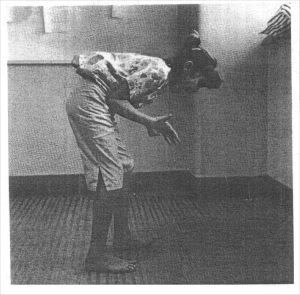


This is why:
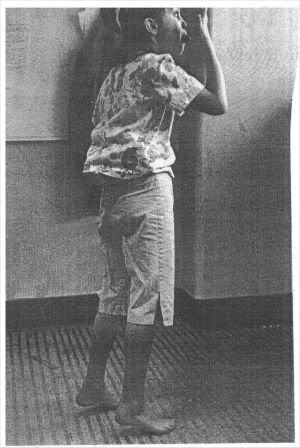


If you were in the wrong place at the wrong time, the wrong age, the wrong functioning level, this could be your life. This what people like them think about people like us.

20 October, 2009

Behaviorism and Spoon Theory

Things are still rough but since I've really accepted that and hit the bottom, I've at least been doing some writing and recording music. Which is the only good thing that ever comes out of things being rough. So I figured I should write a blog post, too. I thought I would write about behaviorism and spoon theory.

This summer I interned at a school that uses Applied Behavior Analysis to treat kids with autism. It was a strange experience. If I didn't have an ASD, I'm sure I would have immediately begun daydreaming about working there someday. Most of the instructors are young women with BAs in various subjects, small liberal arts college kind of people, the culture I'm from. It's much more fun and informal than an ordinary school; you're expected to hug and tickle the kids and call them "buddy;" you go on trips to the swimming pool, on the subway; you set up obstacle courses where they can practice social skills. And it's in the city. Being homesick, especially, I've started to think "screw being realistic, I just want to live in Manhattan."

The thing is I could never work at this school because they don't understand spoon theory. I mean, of course they don't, they're behaviorists.

Behaviorism means you only think about what people are doing, not what they're feeling or why they're feeling the way they are. In a lot of ways this is good. Behavior modification is by far the most effective way to treat severe autism, which makes sense because autism and the motivations of autistic people aren't always easy for normal people to understand. And also, I think, if you keep dwelling on Oh No What A Confusing Disability This Person Has, that doesn't really help the person. Teaching the person to do specific things is good both because skills are good, and because getting skills and understanding rules is good for a person. The instructors at the school where I interned had a really refreshing attitude: they hugged the kids, they talked to the kids and each other about how funny, cool, interesting, and nice the kids were, and they expected the kids to improve.

My parents tried to convince me not to go to college right out of high school. They thought I wasn't ready. I like my parents a lot, but my whole life, they have consistently underestimated my skills, and then used my lethargy and behavioral problems resulting from their attitudes to "prove" that I'm not ready for things. (This is why I'm completely dishonest when I talk to them about how things are in the UK--they would overreact, and probably use my current bad experiences as ammunition against me for years to come.) At eighteen, I knew this about my parents and I knew how it affected me. I knew how different, how much happier and more competent I was at summer camp; and even when I wasn't happy or competent, at least I could forget about it by stimming or reading or writing, instead of having my problems amplified by my parents' reactions.

So I insisted on going to college. It was the best decision I've ever made. I went to a big, anonymous place where no one expected me to fail, and I'm not saying I did as well as a normal person, but I didn't fail, and that experience has changed me and continues to change me. I think this could be considered an example of behaviorism, maybe. I knew that action needed to be taken, that physical things needed to happen, for me to improve. Not focusing on how things seemed, but what I did, in a quantifiable sense.

Which is what behaviorism is, right?

But sometimes, behaviorism isn't enough. Especially with kids. Which is where Spoon Theory comes in. Spoon Theory is an analogy created by a woman with lupus to explain what it feels like to have lupus, but people with other invisible physical disabilities have also begun using it, and I think it can also be applied to ASD. When you do Spoon Theory, you imagine that you have a certain number of spoons that you get every day, and it takes a spoon to get dressed, and a spoon to wash your hair, and a spoon to walk to the car, and if you run out of spoons you're really screwed, or maybe you can borrow some of your spoons for tomorrow, but then you're really screwed for tomorrow. The idea is that a person with lupus (or CSF, or ASD) has to think a lot about what they're going to do, and manage their time wisely, because everything is harder and takes more energy. You can't just mess around trying whatever you want. And you have to recharge.

The problem with the school where I interned, I thought, is that they were such behaviorists that they only thought about what the kids should be doing, and never ever about what they were feeling. They didn't seem to think about stress, about how hard those kids were working, and how sounds and textures and those ever-present hugs could really wear on a person with ASD. I think autistic kids who whine and yell and hurt other people or themselves are generally kids who don't have any spoons left and need a break. I think stimming can be part of a good break. But at the school, stimming and yelling and crying and throwing yourself on the floor were just "bad behaviors." Or "non-compliance." But there's no humanity in looking at a child that way! They didn't treat the kids as OMG Poor Disabled Kids, which was good, but I felt like they often just ignored that these were kids with really different brains. They would talk as if the kids were stimming for attention, that the kids were trying to be manipulative when they cried or complained. AUTISTIC PEOPLE ARE NOT GOOD MANIPULATORS. PEOPLE WITH SENSORY TROUBLES HAVE A LOT TO COMPLAIN ABOUT.

When I was in middle school, I would come home from school and get on the Internet. Which would result in my mom descending on me and telling me how "addictive" my behavior was and how I should instead come home and start doing my homework right away. But school was exhausting. It was crowded and loud and people hurt me and it was hard to understand what to do. The Internet was always easy and fun. I wanted the same, simple, good thing to be waiting every day when I came home, so I could make it through the day. Or you could say: when I came home I was out of spoons. But my mom just saw it as bad behavior.

I could never work at the ABA school in New York, not only because I'm offended by their attitudes, but because I had to sleep and stim so much to get myself able to go there, because I knew that it wouldn't be acceptable for me to curl up in my chair or rock or flap my hands or take my shoes off, because it would be considered bad behavior. Or the adult version of bad behavior which would mean unprofessional or maybe taking drugs, I don't know, because they didn't know spoon theory and they wouldn't have room for the idea that people do this for a reason.

I guess I don't have a super succinct conclusion to come to about the intersection of behaviorism and spoon theory. I think that a positive attitude that focuses on quantifiable achievements is really important for helping ASD people. But I think that professionals and parents have to try to understand how we're feeling, too, and when they're working with someone who can't communicate easily, they must not assume that "bad behavior" means laziness or meanness or inability to do the work. Sometimes it just means not having enough spoons.